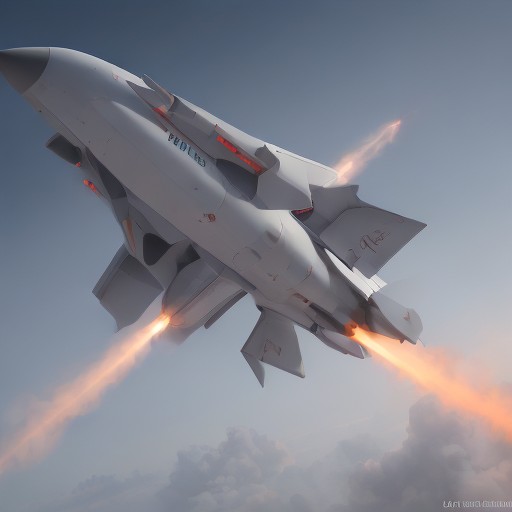
The Rise of Hypersonic Missiles
In a world where speed and precision are paramount in military strategy, hypersonic missiles have emerged as the latest game-changer on the battlefield. Designed to travel at speeds exceeding Mach 5 (five times the speed of sound), these advanced weapons are redefining what it means to be a superpower. With their remarkable maneuverability and evasion capabilities, hypersonic missiles render traditional defense systems nearly obsolete, igniting a fierce arms race among nations.
India’s Leap into Hypersonic Technology
In a significant milestone, India has recently tested its first long-range hypersonic missile, marking its entry into an exclusive club of nations capable of deploying such advanced weaponry. Defence Minister Rajnath Singh hailed the successful flight trial conducted by the Defence Research and Development Organisation (DRDO), praising the collaboration between the Armed Forces and the industry. This test not only showcases India’s technical prowess but also sends a clear message to potential adversaries about its growing military capabilities.
The successful DRDO hypersonic missile test demonstrates India’s commitment to enhancing its defense systems amid escalating regional tensions. With countries like China and Pakistan also advancing their missile technology, this development is crucial for maintaining strategic balance in South Asia.
North Korea’s Ambitious Missile Program
On the other side of the globe, North Korea has been making headlines with its relentless pursuit of hypersonic missile technology. Recent tests reveal a multiwarhead missile that successfully struck multiple targets, showcasing the North’s advancements in missile guidance systems. Moreover, the launch of a new hypersonic intermediate-range missile powered by solid propellants signals a significant leap in their nuclear capabilities.
As the world watches this development unfold, questions arise about the implications of North Korea’s expanded missile arsenal. This progress not only threatens regional stability but also poses a challenge to global security, prompting nations to reevaluate their defense strategies.
Russia’s Aggressive Posture
Meanwhile, Russia is not lagging behind. President Vladimir Putin has ordered the serial production of the Oreshnik hypersonic missile, which has already been deployed in combat against Ukraine. Reports indicate that Russian forces have utilized hypersonic missiles in attacks, achieving speeds of an astonishing Mach 11. Each missile was equipped with six non-nuclear warheads, releasing submunitions that wreaked havoc on targeted areas.
This aggressive use of hypersonic technology raises alarms in NATO and beyond. The alliance has responded with urgent discussions on how to counter this emerging threat, as Russia’s advancements in hypersonic capabilities could potentially shift the balance of power in Europe.
The Implications of Hypersonic Warfare
As hypersonic missiles become more prevalent, their implications for global military strategy are profound. The ability to strike at hypersonic speeds means that adversaries have little time to react, making traditional missile defense systems inadequate. This reality forces nations to rethink their defense architectures and invest in new technologies to counter hypersonic threats.
The strategic calculus changes dramatically as countries develop offensive and defensive hypersonic systems. This arms race could lead to a new era of military engagement where speed, stealth, and precision dictate the outcomes of conflicts.
International Reactions and Speculations
The rise of hypersonic missiles has not gone unnoticed by world leaders. Nations are grappling with the challenges posed by these advanced weapons, prompting discussions on arms control and international treaties. United States officials, for instance, have expressed concerns over Russia and China’s advancements, urging a collective international response to prevent a destabilizing arms race.
Furthermore, countries like Japan and Australia are also exploring the development of hypersonic capabilities as part of their defense strategies, signaling a shift in the Asia-Pacific region’s security dynamics. This proliferation of hypersonic technology could lead to heightened tensions, as nations vie for supremacy in this new landscape of warfare.
The Future of Warfare
As we stand on the brink of a new era in military technology, the question arises: what does the future hold for hypersonic warfare? With the potential for these weapons to alter the course of conflicts, nations must tread carefully in the pursuit of hypersonic capabilities.
There are concerns that the speed and unpredictability of hypersonic missiles could lead to unintended escalation in conflicts. As nations develop systems that can launch hypersonic strikes, the risk of miscalculation increases, potentially igniting catastrophic consequences.
Conclusion: A Call for Caution
The advancements in hypersonic missile technology present an unprecedented challenge to global security. With countries like India, North Korea, and Russia making significant strides, the world must grapple with the implications of this new weapons race.
As nations navigate the complexities of hypersonic warfare, it is crucial for international dialogue and cooperation to take center stage. Establishing frameworks for arms control and accountability could help mitigate the risks associated with these powerful weapons.
In this rapidly evolving landscape, the stakes are higher than ever. The race for hypersonic supremacy is not just about military might; it’s about the future of global stability. As we move forward, one thing remains clear: hypersonic missiles are not merely a trend; they are a transformative force that could redefine the very nature of warfare.


