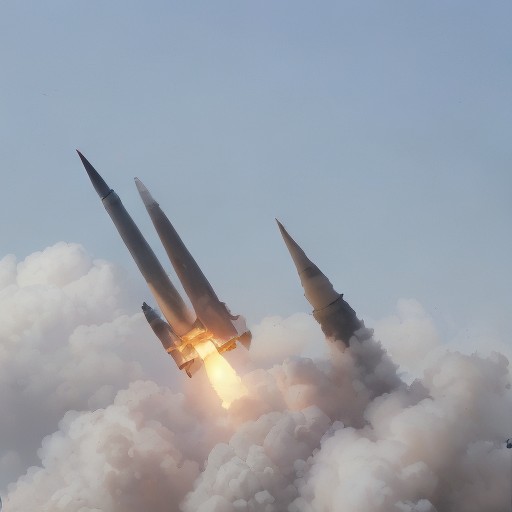
The New Era of Ukrainian Warfare
In a dramatic escalation of the ongoing conflict, Ukraine has embarked on a revolutionary approach to warfare by deploying an array of long-range missiles against Russian territory. With significant backing from international allies, this move marks a pivotal shift in military strategy that could reshape the dynamics of the conflict. As Ukrainian forces harness the power of advanced missile technology, the implications for both nations—and the world—are profound and multifaceted.
French-Provided SCALP Missiles: A Game Changer
One of the most significant developments in Ukraine’s arsenal is the introduction of SCALP missiles, provided by France. These long-range weapons, with a reach of approximately 155 miles, are designed for precision strikes and could potentially allow Ukrainian forces to extend their operations deep into Russian territory. French Foreign Minister Jean-Noël Barrot has hinted at the operational readiness of these missiles, though it remains unclear whether they have been deployed in actual strikes against Russian targets.
The strategic implications of SCALP missiles are enormous. With the capability to hit key military installations, these missiles could disrupt Russian logistical networks and command centers, thereby leveling the playing field in a conflict that has often favored the larger and more heavily armed Russian military.
British Storm Shadow Missiles: Already in Action
Adding to Ukraine’s growing missile capabilities are the British-provided Storm Shadow missiles, which have already been employed in strikes against Russian positions. Similar in range to the SCALP missiles, the Storm Shadow has proven to be an effective tool for Ukrainian forces seeking to maximize their operational reach. Coupled with the US-provided ATACMS missiles, which boast an impressive range of approximately 190 miles, Ukraine is now equipped to conduct strikes deeper into Russian territory than ever before.
These long-range missiles not only extend Ukraine’s strike capabilities but also send a clear message to Russia: Ukraine is prepared to retaliate against any aggression, and the support from Western allies is unwavering. The combination of these sophisticated weapons represents a significant escalation in the conflict, raising questions about the potential for a broader confrontation.
US-Provided ATACMS Missiles: A Controversial Authorization
Among the most noteworthy contributions to Ukraine’s missile arsenal are the ATACMS missiles from the United States. These tactical missiles have been explicitly sanctioned for use in deeper strikes within Russia, although US President Joe Biden has delineated that permission does not extend to targets in Moscow or St. Petersburg. This nuanced authorization raises eyebrows and invites speculation about the potential for further escalation.
With ATACMS in play, Ukrainian forces have a powerful tool at their disposal to disrupt Russian operations. The deployment of these missiles could significantly impact the battlefield, potentially dismantling Russian command structures and supply lines. However, the limitations set by the US also demonstrate a cautious approach to avoid provoking a direct confrontation between NATO and Russia.
Ukrainian Special Forces: Bold Incursions into Russian Territory
In addition to utilizing advanced missile technology, Ukrainian special forces have taken matters into their own hands by conducting deep incursions into Russian-held territories. Reports indicate that these elite units have successfully targeted and neutralized air defense systems located up to 60 kilometers inside Russian territory. This bold strategy not only disrupts Russian defenses but also serves as a psychological blow to the Russian military.
The audacity of these operations underscores the resolve of Ukraine to reclaim its sovereignty and deter further aggression from Russia. By demonstrating their capability to operate deep within enemy lines, Ukrainian special forces are redefining the parameters of the conflict, instilling fear and uncertainty in Russian ranks.
Russian Responses: A Dangerous Escalation
The Russian response to Ukraine’s missile capabilities has been swift and severe. President Vladimir Putin has issued stark warnings, asserting that Russia reserves the right to use its weapons against any nation that facilitates attacks on Russian territory. This rhetoric signals a potential escalation of hostilities, as Russia may feel compelled to respond with increased military action or even resort to its advanced weaponry.
In a show of force, Russia has recently deployed new intermediate-range hypersonic ballistic missiles, such as the Oreshnik (Hazel Tree). These missiles are reported to be extremely difficult to intercept with existing air defense systems, raising the stakes in this high-stakes game of military chess. The introduction of such technology could lead to a significant shift in the balance of power, as Russia seeks to counter the newfound capabilities of Ukrainian forces.
The Broader Implications: A New Cold War?
The intensification of missile warfare in Ukraine has far-reaching implications that extend beyond the battlefield. As NATO allies continue to provide military support, the conflict has the potential to escalate into a broader confrontation between Russia and the West. The stakes are higher than ever, and the balance of power in Europe hangs in the balance.
Moreover, the proliferation of advanced missile technology raises critical questions about global security. The conflict serves as a stark reminder of the dangers posed by modern warfare, where precision strikes can lead to unintended consequences. As nations grapple with the implications of this new reality, the specter of a new Cold War looms large.
Public Sentiment and the Call for Peace
As the conflict escalates, public sentiment both in Ukraine and abroad is increasingly polarized. Many Ukrainians view the acquisition of long-range missiles as a necessary measure to defend their homeland and retaliate against Russian aggression. Conversely, there are growing calls for de-escalation and diplomatic solutions to avoid further bloodshed.
The dichotomy of opinions highlights the urgent need for dialogue and negotiation. While the advances in missile technology provide Ukraine with formidable capabilities, the continued escalation risks drawing in more nations and prolonging the conflict. The international community must grapple with the complex dynamics at play and work towards a resolution that prioritizes peace over warfare.
Conclusion: The Future of Warfare in Ukraine
As Ukraine embraces advanced missile technology and engages in bold military operations, the landscape of warfare is undergoing a profound transformation. The introduction of SCALP, Storm Shadow, and ATACMS missiles is not merely a tactical shift; it represents a fundamental change in how conflicts are waged in the modern era.
With the specter of heightened tensions and potential escalation looming, the world watches with bated breath. The implications of Ukraine’s long-range missile revolution extend far beyond its borders, challenging established norms and redefining global security. As both sides prepare for an uncertain future, the question remains: will this new era of warfare lead to a decisive resolution, or will it plunge the region—and the world—into deeper chaos?


