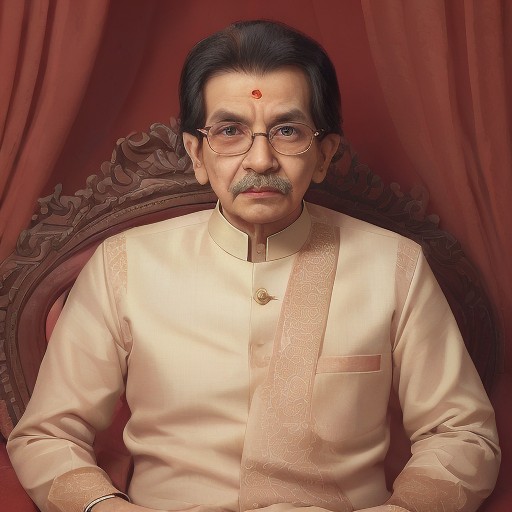
Introduction: The Legend of Balasaheb Thackeray
In the vibrant and tumultuous landscape of Indian politics, few figures have left a mark as indelible as Balasaheb Thackeray, fondly known as Bal Thackeray. His journey from a cartoonist to the founder of the Shiv Sena is a testament to his extraordinary vision and relentless drive to uplift the Marathi community. This article delves into the life, political career, and enduring legacy of Bal Thackeray, exploring how his ideologies and actions continue to shape contemporary Maharashtra politics.
Founding Shiv Sena: A Movement Born from Passion
In 1966, Bal Thackeray established the Shiv Sena, a party that emerged in response to the growing concerns of Maharashtrians feeling sidelined in their own state. At a time when Mumbai was witnessing an influx of migrants from across India, Thackeray’s vision was clear: to protect and promote the interests of the Marathi-speaking populace. The party quickly gained traction, resonating with locals who felt their culture and identity were under threat.
Through a combination of fiery rhetoric and grassroots mobilization, Thackeray transformed Shiv Sena into a powerful political force. His emphasis on Marathi pride and culture not only galvanized support but also instilled a sense of belonging among his followers. This was a significant shift in Maharashtra’s political landscape, as Thackeray championed issues that directly impacted the lives of ordinary citizens.
Thackeray’s Political Career: A Charismatic Leader
Thackeray’s political journey was marked by his tenure as the Chairman of the Brihanmumbai Municipal Corporation (BMC), where he wielded considerable influence over Mumbai’s urban governance. His ability to connect with the masses through his captivating speeches and public appearances was unparalleled. He was not just a politician; he was a symbol of hope and resilience for many Maharashtrians.
His leadership style was characterized by a mix of charisma and confrontation. Thackeray was known for his strong oratory skills, which enabled him to mobilize crowds and articulate the frustrations of the Marathi-speaking population. His speeches often evoked strong emotions, rallying support while simultaneously drawing criticism for their contentious nature.
Controversial Yet Compelling: The Dual Nature of Bal Thackeray
Despite his popularity, Bal Thackeray’s tenure was not without controversy. His confrontational approach often led to clashes with other political parties, and his rhetoric sometimes crossed the line into divisive territory. Critics accused him of fostering a culture of intolerance and xenophobia, particularly against non-Marathi speakers.
Nevertheless, Thackeray’s ability to tap into the sentiments of the masses cannot be dismissed. He spoke for a demographic that felt marginalized, using his platform to voice their concerns. His legacy, however, is a complex tapestry woven with threads of admiration and criticism, reflecting the dual nature of his impact on Maharashtra politics.
The Thackeray Dynasty: A Legacy of Politics
Bal Thackeray’s influence did not end with his passing on November 17, 2012. His family, particularly his son Uddhav Thackeray and nephew Raj Thackeray, have continued to play pivotal roles in Maharashtra’s political arena. Uddhav, who succeeded his father as the leader of Shiv Sena, faced significant challenges, including a rebellion from Eknath Shinde’s faction in 2022 that led to a split within the party.
Meanwhile, Raj Thackeray, who founded the Maharashtra Navnirman Sena (MNS), has pursued a similar agenda of Marathi nationalism but with a distinct approach. The rivalry between the two factions has kept Maharashtra politics in a constant state of flux, with each leader vying for the same voter base while attempting to define their own legacy.
Current Dynamics: The Thackeray Influence in 2023
As of 2023, the political landscape in Maharashtra is still heavily influenced by the ideological battles rooted in Bal Thackeray’s vision. The division between Uddhav’s Shiv Sena and Raj’s MNS continues to create a dynamic yet contentious environment. Recent elections and local governance issues have reignited discussions about Marathi identity and the future of regional politics.
Uddhav Thackeray’s leadership has been marked by attempts to modernize the party while retaining its core principles. However, the challenges he faces from both within and outside his faction reflect the ongoing struggle for dominance in Maharashtra’s political scene. The emergence of new political players and shifting alliances makes the future uncertain, yet the Thackeray name remains synonymous with Marathi nationalism.
Public Sentiment and Controversy: Reactions to the Thackeray Legacy
The legacy of Balasaheb Thackeray evokes a range of emotions among the public. For many, he is a hero who fought for the rights of the Marathi people, a figure who stood up against perceived injustices. Conversely, others view him as a polarizing figure whose divisive politics have contributed to societal tensions.
Recent surveys indicate that while a significant portion of the Marathi electorate still resonates with Thackeray’s ideals, there is also a growing demand for more inclusive and holistic governance. This dichotomy presents both a challenge and an opportunity for the Thackeray family as they navigate the evolving political landscape.
Conclusion: Balasaheb Thackeray’s Enduring Legacy
Balasaheb Thackeray’s impact on Maharashtra politics is undeniable. His founding of the Shiv Sena and his passionate advocacy for the Marathi community have left an enduring imprint on the state’s political fabric. As Maharashtra continues to grapple with complex issues of identity, migration, and governance, Thackeray’s legacy serves as both a beacon of pride and a point of contention.
As we look towards the future, the question remains: how will the Thackeray family adapt to the changing political dynamics while staying true to the vision of Balasaheb Thackeray? In the world of Indian politics, where legacy often intertwines with contemporary challenges, the influence of Balasaheb Thackeray will undoubtedly continue to spark discussions, debates, and speculations for years to come.


