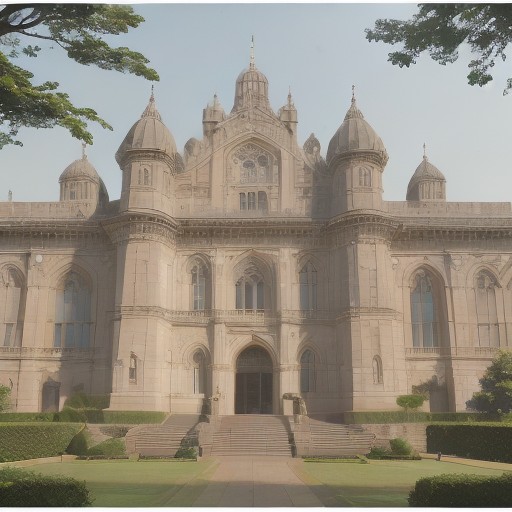
The Pulse of Justice: Bombay High Court’s Impact on Maharashtra’s Legal Landscape
The Bombay High Court, a beacon of justice and legal oversight in Maharashtra, has been at the forefront of several significant developments recently. As the court continues to navigate through a labyrinth of legal challenges and public policy concerns, its decisions not only shape the judicial framework but also resonate deeply within the fabric of society. From land acquisition delays to protective measures for social activists, the court’s recent actions have sparked debate and speculation across the state.
Land Acquisition Delays: A Judicial Outcry
One of the most pressing issues that have caught the court’s attention is the alarming delay in land allotment for a new court building in suburban Bandra. The Maharashtra government had assured the court back in 2023 that 30 acres of land would be made available for this critical infrastructure project. However, as the months rolled on, the promise remains unfulfilled, leading to a sharp rebuke from the Bombay High Court.
The court’s criticism highlighted the deteriorating condition of the existing courthouse in south Mumbai, which poses serious safety risks to judicial officers and staff. “The lives of our judicial officers are non-negotiable,” remarked one of the judges, emphasizing the urgent need for swift government action. This situation raises questions about the prioritization of judicial infrastructure in a rapidly urbanizing state. Can the government afford to let the safety of its judiciary hang in the balance?
Judicial Appointments: A Step Towards Stability?
In a move that could potentially reshape the dynamics within the Bombay High Court, recommendations have been made to consider Justice Abhay Ahuja for appointment as a permanent judge. This development comes at a time when the court is facing a backlog of cases and can benefit from experienced and stable leadership. The legal community is abuzz with speculation regarding how Justice Ahuja’s permanent appointment might influence the court’s handling of key cases. Will this change bring about a new era of efficiency and accountability within the judiciary?
Defending Activism: Court Protects Voices of Dissent
In a notable decision, a division bench of the Nagpur bench took a firm stance on safeguarding civil liberties by directing the city police commissioner to assess the need for police protection for a social activist. This activist had filed a petition against the Maharashtra government’s controversial “unregulated freebie” schemes, including the much-discussed Ladki Bahin Yojana. The court’s emphasis on the state’s duty to protect citizens’ life and liberty marks a pivotal moment in the ongoing battle between governmental authority and individual rights.
This raises a critical question: Are the state’s social welfare initiatives infringing on the principles of justice and fairness? The court’s proactive approach in this matter showcases its role as a defender of democratic values, but it also invites scrutiny regarding the balance between public policy and individual rights.
Sports Infrastructure: A Battle for Public Spaces
The Bombay High Court’s commitment to public welfare was further underscored when it quashed the government’s decision to relocate a sports complex from its original site in Navi Mumbai to a more remote area. The court’s ruling underscores the necessity for accessible public spaces and sports facilities in urban settings, especially given the increasing population density and urbanization challenges facing Maharashtra.
Critics of the government’s plan argued that relocating the sports complex would diminish access for local youth, stifling opportunities for athletic development and community engagement. The court’s decision to prioritize public access highlights the need for a comprehensive approach to urban planning — one that considers community needs alongside development goals. Could this ruling pave the way for a new standard in how urban infrastructure is planned and executed?
Land Disputes and Historical Preservation: A Complex Legal Tangle
The Bombay High Court is also grappling with ongoing legal proceedings surrounding land disputes involving historical monuments, particularly the Jama Masjid in Chandausi. Eight petitioners, including advocate Hari Shankar Jain, have alleged that a temple was demolished to construct the mosque, seeking legal access to the site under the Ancient Monuments Preservation Act.
This case has ignited a fiery debate over the preservation of historical sites and cultural heritage. As the court navigates this complex legal tangle, it will need to balance the sentiments of various communities while upholding the tenets of law. Is the court prepared to handle the potential backlash from communities that view this case as a matter of cultural identity?
Judicial Orders: Upholding Procedural Integrity
In a recent ruling, the Bombay High Court quashed a notification related to the reconstitution of State Bar Council committees, citing procedural violations. This decision reinforces the importance of adhering to legal protocols and maintaining transparency within the judicial process. Additionally, the court observed that provisional acknowledgments on department portals are sufficient for compliance under the CGST Act, a ruling that could streamline legal proceedings in tax matters.
These decisions signify the court’s unwavering commitment to uphold procedural integrity and ensure that justice is not only done but also seen to be done. However, they also raise questions about the efficiency of legal processes. Are these rulings a sign of a more responsive judiciary, or do they highlight systemic weaknesses that need addressing?
The Future of the Bombay High Court: A Balancing Act
As the Bombay High Court continues to navigate through these multifaceted legal challenges, its role as a guardian of justice remains paramount. The recent developments, marked by a blend of criticism and commendation, reflect the court’s active engagement in the socio-political landscape of Maharashtra. The implications of its decisions extend beyond the courtroom, influencing public policy, civil rights, and community welfare.
In this era of heightened scrutiny, the court’s actions will undoubtedly be watched closely by legal scholars, activists, and the general public alike. Will the Bombay High Court emerge as a trailblazer in judicial reform, or will it face mounting pressure from governmental authorities and societal expectations? Only time will tell, but one thing is certain: the court’s decisions will continue to shape the narrative of justice in Maharashtra for years to come.
As these developments unfold, public discourse surrounding the Bombay High Court will likely intensify. Citizens are encouraged to engage in discussions about the implications of these rulings, the importance of judicial independence, and the role of activism in shaping public policy. The court may be a legal institution, but its impact resonates deeply within the heart of Maharashtra’s society.
In conclusion, the Bombay High Court stands as a pivotal player in the ongoing legal and social discourse in Maharashtra. All eyes will be on its next moves as it confronts the challenges of a rapidly evolving landscape, ensuring that justice remains a cornerstone of governance and public life.


