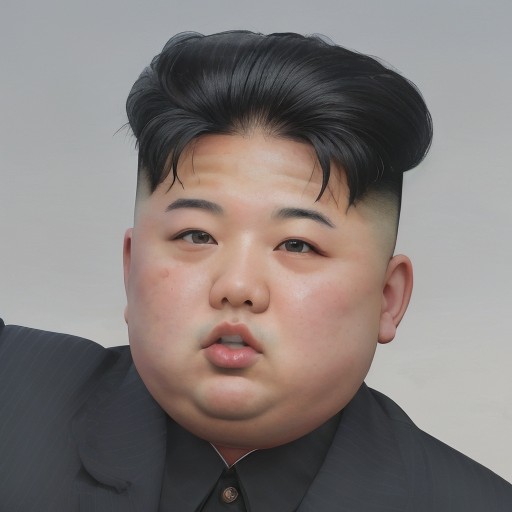
The Rise of Kim Jong Un: A Legacy of Tension
Since taking power in December 2011, Kim Jong Un has emerged as one of the most controversial and enigmatic leaders in modern history. As the supreme leader of North Korea and general secretary of the Workers’ Party of Korea, Kim has maintained an iron grip on his nation while simultaneously escalating tensions with the international community. His recent actions, particularly concerning nuclear and missile development, have raised eyebrows and fears across the globe.
Recent Nuclear and Missile Tests: A Provocative Strategy
In the past few months, North Korea has ramped up its ballistic missile tests, a clear signal of Kim Jong Un’s unwavering commitment to advancing his military capabilities. The latest reports indicate that North Korea has successfully conducted tests on intercontinental ballistic missiles (ICBMs), marking a significant moment since it had been nearly a year since the last test of such magnitude. These ICBMs are designed to reach targets across the globe, posing a direct threat to both regional and international security.
In addition to ICBMs, North Korea has also introduced suicide drones intended to crash into specific targets, a tactic that Kim is advocating for mass production. This new development represents a drastic shift in military strategy, showcasing the country’s ambition to enhance its precision strike capability. The implications of these advancements are profound, as they indicate a willingness by Kim to invest heavily in military technology despite the dire economic conditions faced by his country.
Military Relations with Russia: A Disturbing Alliance
As global tensions rise, Kim Jong Un has sought to strengthen military ties with Russia, a move that has alarmed many in the international community. Reports have surfaced indicating that North Korean troops are being deployed to Russia to assist in the ongoing conflict in Ukraine. This unprecedented military collaboration has been met with stern condemnation from both South Korean and European Union officials, who view it as a dangerous escalation of military involvement in geopolitical conflicts.
The ramifications of these actions extend beyond the immediate region, as they signal a potential shift in the balance of power. The prospect of North Korean soldiers fighting alongside Russian forces raises questions about the future of both nations’ military strategies and their implications for global security.
Diplomatic Reactions: A Unified Front Against North Korea
In response to North Korea’s aggressive posturing, U.S. President Joe Biden has praised the enhanced cooperation between South Korea, Japan, and the United States. During a recent meeting in Peru, Biden emphasized the importance of unity in countering North Korea’s military advancements and its burgeoning cooperation with Russia. This tripartite alliance aims to present a formidable front against the perceived threats posed by Kim Jong Un’s regime.
Biden’s administration has reiterated its commitment to ensuring regional stability and security, highlighting the need for a comprehensive approach to address the challenges posed by North Korea. The U.S. has vowed to work closely with its allies to implement strategies that will deter further military escalation and to hold North Korea accountable for its actions.
International Condemnations and the Future of North Korea’s Military Ambitions
The actions of Kim Jong Un have not gone unnoticed, leading to widespread international condemnation. Top officials in South Korea and the European Union have agreed to collaborate on measures aimed at obstructing deeper military cooperation between Moscow and Pyongyang. This coalition seeks to address the growing security concerns stemming from North Korea’s alleged troop dispatch to Ukraine, reinforcing the idea that the international community will not stand idly by in the face of such provocations.
The combined efforts of nations to counter Kim’s military ambitions signal a shift towards a more proactive approach in dealing with North Korea. As diplomatic efforts intensify, the question remains: will these measures be enough to dissuade Kim from pursuing further military escalation, or will we see an even greater defiance from the North Korean leader?
The Implications of Kim Jong Un’s Nuclear Strategy
The implications of Kim Jong Un’s nuclear strategy are far-reaching and complex. As North Korea continues to develop its nuclear arsenal, the potential for a catastrophic miscalculation increases. The prospect of a nuclear-armed North Korea has long been a source of anxiety for neighboring countries, particularly South Korea and Japan, which would find themselves in the crosshairs of any potential conflict.
Moreover, Kim’s aggressive military posture could provoke an arms race in the region, prompting South Korea and Japan to enhance their own military capabilities. The introduction of advanced missile defense systems and the potential for nuclear armament in these countries could alter the geopolitical landscape in East Asia, leading to increased tensions and uncertainty.
Public Opinion and Speculation: What Lies Ahead?
As Kim Jong Un continues to assert his dominance on the international stage, public opinion remains divided. Some view his actions as a desperate attempt to solidify his power amid a struggling economy, while others see it as a calculated strategy to gain leverage against the West. The speculation surrounding North Korea’s next moves is palpable, with analysts debating whether Kim will continue to escalate tensions or consider diplomatic avenues to alleviate international pressure.
The potential for further military tests or provocations looms large, and the global community watches closely for any signs of de-escalation or increased aggression from Pyongyang. As history has shown, Kim Jong Un is not one to shy away from making bold moves, and the coming months are likely to be critical in determining the trajectory of North Korea’s military ambitions and its relationship with the world.
Conclusion: A Call for Vigilance and Unity
In conclusion, Kim Jong Un’s recent actions have undeniably heightened tensions in an already volatile region. His commitment to advancing North Korea’s nuclear and missile programs, coupled with a disturbing alliance with Russia, poses significant challenges for global security. The international community must remain vigilant and unified in its response to these developments, as any miscalculation could have dire consequences.
The future of North Korea’s military ambitions hangs in the balance, and as Kim continues to navigate the complex landscape of international relations, the world holds its breath in anticipation of what comes next. The stakes have never been higher, and it is clear that the implications of Kim Jong Un’s decisions will resonate far beyond the borders of North Korea.


