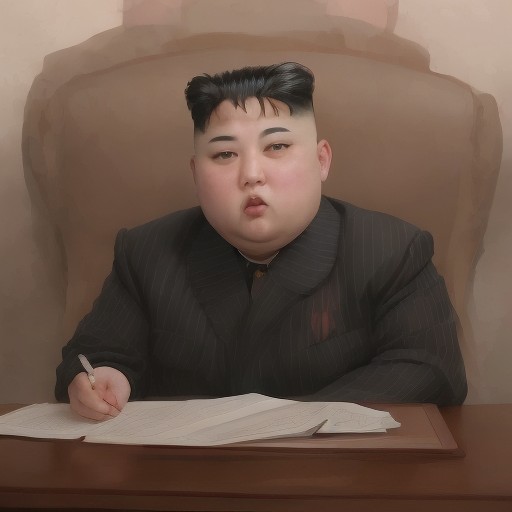
The Supreme Leader’s Grip: Kim Jong Un’s Reign Since 2011
Since taking the helm of North Korea in December 2011, Kim Jong Un has cultivated an image of a resolute and determined leader, consolidating power and pursuing aggressive military initiatives that have captured global attention. His rise to supreme leader marked a new era for the hermit kingdom, characterized by both ambitious technological advancements and a series of provocative military displays. As we delve into 2024, it becomes clear that Kim’s strategies are not just about maintaining control domestically; they are also aimed at sending a clear message to the international community.
Missile Mania: Kim’s Ballistic Tests in November 2024
In a dramatic escalation of military activities, Kim Jong Un ordered a series of ballistic missile tests, culminating in a significant intercontinental ballistic missile (ICBM) test in November 2024. This demonstration of military might is not merely a show of force but a strategic response amid rising tensions with the United States, South Korea, and Japan. By showcasing advanced missile technology, North Korea aims to assert its position as a formidable power in the region.
Military analysts suggest that these tests are part of Kim’s broader strategy to enhance North Korea’s defense capabilities and deter perceived threats. The implications are profound: as the North continues to refine its military edge, the balance of power in East Asia is increasingly precarious.
North Korea and Russia: A Troubling Alliance
In 2024, the international community has raised alarms over North Korea’s burgeoning military partnership with Russia. Reports indicate that Kim Jong Un has deployed thousands of troops to Russia to assist in the ongoing conflict in Ukraine. This cooperation has drawn widespread condemnation, particularly from South Korea and the European Union, who view it as a dangerous alignment that could destabilize the already fragile geopolitical landscape.
The implications of this partnership are vast. As North Korea and Russia bolster their military ties, it raises questions about the future of regional security and the potential for conflict escalation. The United States and its allies are closely monitoring these developments, prompting joint military exercises as a show of strength against what they perceive as an increasing threat.
The Rise of Suicide Drones: A New Era of Warfare
One of the most alarming aspects of Kim Jong Un’s military strategy is his emphasis on the development of suicide drones. These unmanned aerial vehicles are designed for precision strikes, and Kim has made it clear that mass production is a military necessity for North Korea. The deployment of such drones represents a significant evolution in warfare tactics, allowing for remote attacks that can bypass traditional defense mechanisms.
North Korea has demonstrated these drones in various exercises, showcasing their capability to accurately hit designated targets. This technological advancement presents a new challenge for regional adversaries, who must now consider the potential for drone warfare in addition to conventional military threats.
International Outcry: Responses to North Korea’s Actions
The international reaction to Kim Jong Un’s military initiatives has been swift and severe. The United States, South Korea, and Japan have condemned North Korea’s missile tests and its military support to Russia. In response, these nations have conducted joint military exercises, reinforcing their commitment to collective defense and signaling to North Korea that aggressive actions will not go unchecked.
These developments have sparked a heated debate about the effectiveness of diplomatic efforts to curtail North Korea’s military ambitions. Critics argue that traditional sanctions and negotiations have failed to produce meaningful results, while others believe that a more robust military posture is necessary to deter Kim’s provocations.
The Regional Implications of Kim’s Military Strategies
As Kim Jong Un continues to pursue his military ambitions, the regional implications become increasingly pronounced. North Korea’s actions have not only heightened tensions with its immediate neighbors but have also reverberated throughout the global community. The potential for miscalculations or accidental confrontations is a constant concern, as military activities escalate.
Furthermore, the growing military cooperation between North Korea and Russia complicates the strategic landscape. With both nations working together, the risks of conflict escalation in Eastern Europe and the Korean Peninsula loom larger than ever. This partnership could embolden Kim to take more aggressive actions, believing he has the backing of a major power.
What Lies Ahead for North Korea and the World?
As we look towards the future, the trajectory of Kim Jong Un’s leadership raises critical questions about stability and peace in the region. Will Kim’s militaristic approach yield the security he seeks, or will it only invite further isolation and conflict? The international community remains on high alert, grappling with the implications of North Korea’s actions while seeking pathways to dialogue and de-escalation.
In conclusion, Kim Jong Un’s bold military initiatives and partnerships in 2024 are not just a reflection of his leadership but are indicative of the larger geopolitical challenges facing the world today. As tensions rise and military advancements continue, the need for a unified response from the international community is more vital than ever. The stakes are high, and the consequences of inaction could be dire.
As this situation evolves, it is crucial for observers and analysts alike to stay informed and engaged, fostering discussions about the implications of Kim Jong Un’s strategies on global security.


