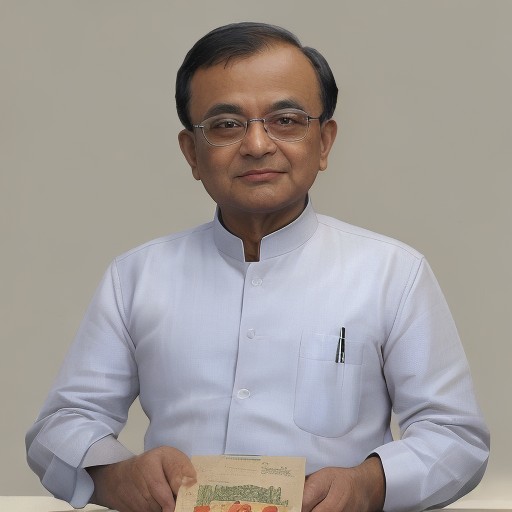
The Resilient Voice of Congress: P. Chidambaram’s Ongoing Political Battle
In the ever-evolving landscape of Indian politics, P. Chidambaram stands out as a seasoned leader with a wealth of experience. The former Union Home Minister and senior Congress leader has recently re-emerged as a prominent voice on critical national issues, asserting his influence within the party and the broader political discourse. From advocating for Jammu and Kashmir’s statehood to challenging the current government’s flagship schemes, Chidambaram’s recent activities are stirring conversations across the nation.
Restoration of Statehood to Jammu and Kashmir: A Democratic Demand
Chidambaram has been vocal about the pressing need for the immediate restoration of full statehood to Jammu and Kashmir. He has criticized the existing arrangement, wherein the Lieutenant Governor holds greater authority than the elected Chief Minister. This situation, according to Chidambaram, not only undermines the democratic process in the region but also reflects a broader trend of centralization that could jeopardize the aspirations of the local populace.
In his statements, Chidambaram emphasized, “The people of Jammu and Kashmir deserve a government that represents their interests and voices. The current governance structure is a mockery of democracy.” His remarks resonate with many who believe that the special status of Jammu and Kashmir should be reinstated to empower its residents fully.
Unity Within Haryana Congress: A Collective Front
As the Haryana assembly elections approach, Chidambaram has taken steps to quell rumors of division within the Haryana Congress. He assured party members and supporters that Haryana Congress is united and ready to contest the elections as a cohesive unit. Chidambaram expressed confidence in the party’s leadership and the candidate selection process, stating, “Once we finalize our candidates, we will campaign together, and victory is within our grasp.”
This assertion comes amidst growing concerns about factionalism within the party, but Chidambaram’s commitment to unity is aimed at rallying the base and presenting a formidable challenge to rival parties in the state.
‘One Nation, One Election’: Chidambaram’s Staunch Opposition
Another significant point of contention for Chidambaram has been the controversial proposal of ‘One Nation, One Election’. He firmly opposes this idea, arguing that it is not feasible under the current constitutional framework and would necessitate at least five constitutional amendments. “The Prime Minister does not have the majority required to push through such sweeping changes,” he remarked.
This stance has sparked a debate about the implications of such a system on India’s diverse electoral landscape, where regional parties play a pivotal role. Critics argue that a one-size-fits-all electoral strategy could diminish local issues’ significance, further centralizing power in New Delhi.
Challenging the Jan Dhan Yojana Narrative
Chidambaram has also taken aim at the Modi government’s claims surrounding the Jan Dhan Yojana, a flagship financial inclusion initiative. He contends that the program was originally introduced during the United Progressive Alliance (UPA) era and that the current government merely rebranded it. “Millions of bank accounts were opened between 2005 and 2014 under the original scheme. The credit should go to the UPA, not the Modi government,” he asserted.
This critique highlights the ongoing battle over narrative control in Indian politics, where each party seeks to claim credit for successful policies while discrediting the achievements of their opponents. Chidambaram’s remarks have rekindled discussions about accountability and transparency in governance.
The INX Media Case: Scrutiny and Allegations
On a more contentious note, Chidambaram and his son Karti Chidambaram continue to face serious allegations in the INX Media case. The Central Bureau of Investigation (CBI) has filed charges against them, alleging irregularities related to a Foreign Investment Promotion Board (FIPB) clearance during Chidambaram’s tenure as finance minister. The father-son duo has sought to defer arguments on framing charges, citing ongoing investigations.
This case has been a significant point of political contention, with Chidambaram asserting that the accusations are politically motivated. “These allegations are a blatant attempt to malign my reputation and silence dissent,” he stated during a recent press conference. The outcome of this case could have profound implications for both Chidambaram’s political future and the Congress party’s standing in the electoral arena.
Karti Chidambaram’s Perspective: Elections as a Tennis Match
Adding a personal touch to the political discourse, Karti Chidambaram recently penned an opinion piece likening Indian elections to a tennis match. He emphasized the unique political realities across various states, highlighting how local issues and regional parties significantly influence electoral outcomes. “Just like in tennis, where each match is determined by the players’ strategies and conditions, Indian elections are shaped by diverse political landscapes,” he wrote.
This analogy not only sheds light on the complexities of Indian politics but also reinforces the need for political parties to adapt and respond to regional concerns rather than adhering to a singular national narrative. Karti’s insights encourage a more nuanced understanding of electoral dynamics, challenging the notion of a uniform political trend across the country.
Conclusion: P. Chidambaram’s Indelible Mark on Indian Politics
P. Chidambaram’s recent activities mark him as a resilient figure navigating the turbulent waters of Indian politics. His advocacy for Jammu and Kashmir, commitment to Haryana Congress’s unity, staunch opposition to ‘One Nation, One Election,’ and challenges to government narratives underscore his ongoing relevance in the political sphere. As the Congress party gears up for future electoral battles, Chidambaram’s voice will undoubtedly be pivotal in shaping strategies and rallying support.
The implications of his actions and statements extend beyond immediate political gains; they reflect the broader struggles within Indian democracy, where power dynamics and regional aspirations often clash. As Chidambaram continues to fight for what he believes is right, he invites both supporters and critics to engage in a dialogue about the future of India’s political landscape.


