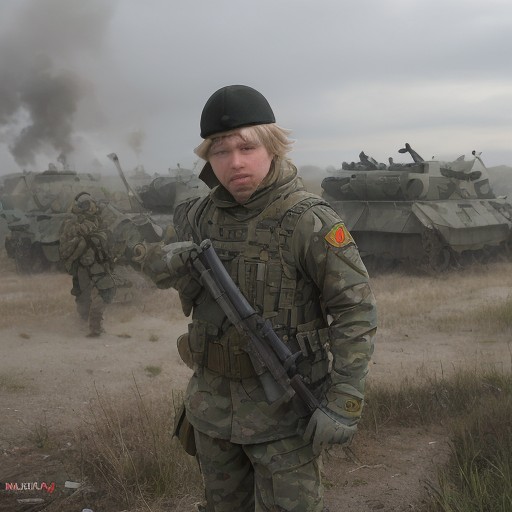
The Current Landscape of the Ukraine-Russia War
The Ukraine-Russia war, now in its third year, continues to capture global attention as it unfolds with intense military activity and significant technological advancements on both sides. As we delve deeper into the ongoing conflict, it becomes evident that the stakes are higher than ever, with predictions of escalating warfare that may lead us closer to the edge of a global confrontation akin to World War 3.
Military Advancements and Technological Accumulation
Recent statements from Valerii Zaluzhnyi, the former Commander-in-Chief of the Ukrainian Armed Forces, indicate a chilling forecast for the conflict. He predicts that Russian troops may achieve substantial advancements by 2027, owing to their accumulation of “technological materials.” This assertion underlines a crucial element of the ongoing warfare: the relentless push for scientific and technological progress on both sides, shaping the future of military capabilities in unforeseen ways.
As technology continues to evolve, both Ukraine and Russia are compelled to innovate rapidly. The race for superior weaponry and military systems could redefine the conflict, making it imperative for nations to remain vigilant and prepared for sudden shifts in the battlefield dynamics.
Current Combat Trends
As of November 2024, the combat situation remains dire. Fighting is rampant across multiple fronts in Ukraine, particularly in the Kurakhove and Pokrovsk areas. Ukrainian forces are experiencing heightened Russian offensives, especially in the Sumy and Kharkiv Oblasts. The intensity of these attacks not only poses immediate threats to Ukrainian sovereignty but also underlines Russia’s commitment to exhausting Ukrainian defenses.
Both sides are actively enhancing their defense capabilities, leading to a protracted stalemate that has significant implications for the war’s trajectory. The reliance on tactical advancements is not merely a response to immediate threats but a long-term strategy that reflects the war’s evolving nature.
Defense Capacities and Strategy
Ukrainian President Volodymyr Zelenskyy is not standing still in the face of these challenges. Announcing plans to produce thousands of cruise missiles and drones by 2025, Zelenskyy is signaling Ukraine’s readiness to bolster its military capabilities. Meanwhile, Russia is also advancing its arsenal, developing intermediate-range ballistic missiles. Notably, on November 22, a missile was launched in the Dnipro region, showcasing Russia’s relentless pursuit of military superiority.
Furthermore, the Russians have adopted a strategy of “exhaustion tactics,” as outlined in their military manuals. This approach aims not for immediate breakthroughs on the battlefield but rather to wear down Ukrainian forces over time. The impact of this strategy is felt not only in military terms but also in economic stability and morale within Ukraine, leading to a complex psychological warfare dimension that complicates the conflict.
Russian Military Developments
In a striking display of military ambition, Russian President Vladimir Putin has confirmed ongoing tests of the new Oreshnik hypersonic missile, which is reportedly stockpiled and ready for deployment. This development raises alarms in Ukraine and among its allies, who are now tasked with devising air defense systems capable of countering such advanced weaponry.
The technological arms race in the Ukraine war is not just a matter of national pride; it has profound implications for global security. As nations observe Russia’s advancements, it becomes clear that the conflict is not isolated but rather a focal point for broader international tensions.
Military Losses and Strategies
Despite the ongoing military developments, Russia has suffered staggering losses with estimates exceeding 730,740 soldiers by November 24, 2024. The persistence of these losses raises questions about the sustainability of Russia’s military strategies. While losses mount, Russia continues to employ various tactical approaches to pursue its objectives in Ukraine, demonstrating a troubling willingness to sacrifice personnel in the name of territorial ambitions.
International Support and Diplomatic Efforts
Amidst the chaos, international support for Ukraine remains steadfast. Germany, for instance, has delivered two IRIS-T anti-air systems and has pledged “mini-Taurus” drones, among other military aid. Such support is crucial for Ukraine’s defense and reflects a broader commitment from Western nations to counter Russian aggression.
Moreover, diplomatic maneuvers are being closely monitored, particularly recent communications between German Chancellor Olaf Scholz and Putin. These discussions could serve as pivotal moments that might influence the conflict’s trajectory, revealing the delicate balance between military action and diplomatic resolution.
The Implications of Ongoing Conflict
The Ukraine-Russia war is not merely a regional conflict; it is a battleground for competing ideologies, military strategies, and geopolitical interests. The ramifications of this war extend beyond European borders, touching on global security and the potential for wider conflicts.
As military advancements continue on both sides, the specter of World War 3 looms larger. The involvement of international allies and the ever-present threat of escalated conflict mean that the situation is precarious. Each action taken by either side has far-reaching consequences, and the world watches with bated breath as the drama unfolds.
Conclusion: A Call for Global Awareness
The unfolding situation in the Ukraine-Russia war serves as a reminder that the stakes are high. As military technology advances and strategies evolve, the potential for conflict escalation grows. It is imperative for the international community to remain engaged, to support diplomatic efforts, and to be aware of the implications of this war on global stability.
As we continue to witness the impact of this conflict, it is essential to engage in discussions about the future. What are the implications of military advancements? How will international support shape the outcome? And, most importantly, how can we steer clear of a wider conflict? The answers to these questions will define the next chapter of this ongoing saga.


