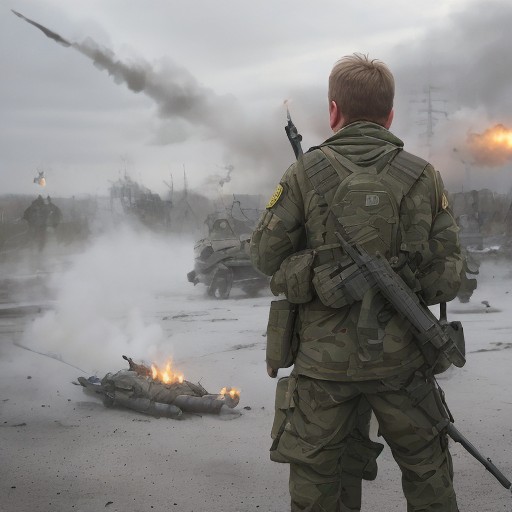
The War That Won’t End: An Overview of the Russia-Ukraine Conflict
The Russia-Ukraine war has entered a new, perilous phase as international dynamics shift and military strategies evolve. In the wake of escalating violence and geopolitical maneuvering, one thing is clear: the conflict is not just a regional crisis; it is a global concern that threatens to reshape the security landscape of Europe and beyond.
U.S. Military Aid: A Game Changer for Ukraine
In a bold move, the Biden administration has granted Ukraine the capability to use the Army Tactical Missile System (ATACMS) against Russian targets. This decision marks a significant escalation in military support, aimed at enhancing Ukraine’s defenses against ongoing Russian aggression. The ramifications of this aid could be profound, as it empowers Ukraine to strike deeper into Russian territory, potentially altering the very calculus of the conflict.
But what does this mean for the broader international community? The decision has been met with mixed reactions, with critics arguing that it could provoke further escalation from Russia. As tensions mount, the question arises: how far will the U.S. go in its support of Ukraine, and what are the potential consequences for NATO and global security?
Russia’s New Tactics: A Drone Warfare Surge
Amidst the ongoing conflict, Russia has intensified its military strategy by deploying record numbers of drones against Ukraine. Reports indicate that Russia launched an astonishing 145 drones in a single night, showcasing its commitment to overwhelming Ukraine’s defenses. The Ukrainian air force has been able to intercept and down 70 of these drones, but the sheer volume of attacks raises alarms about the Russian military’s operational capabilities.
The implications of this drone warfare are significant. It not only puts immense pressure on Ukrainian air defenses but also signals a shift in Russia’s tactical approach. As drone technology evolves, both sides must adapt quickly to counter these new threats. The international community watches closely, recognizing that the outcomes of these battles could influence future military engagements worldwide.
Nuclear Rhetoric: The Dangers of Escalation
In a chilling response to the U.S. military aid to Ukraine, President Vladimir Putin has issued stark nuclear threats, asserting that Russia is justified in using nuclear weapons if attacked. This rhetoric sends shockwaves through the global community, raising fears of a potential nuclear confrontation.
With nuclear weapons on the table, the stakes have never been higher. The chilling possibility of a nuclear escalation looms over the conflict, prompting urgent calls for diplomatic interventions. As international leaders grapple with this reality, the focus shifts to preventing a catastrophic miscalculation that could spiral into an unthinkable outcome.
North Korea’s Surprising Involvement
Adding another layer of complexity to the conflict, recent reports suggest that North Korean soldiers, estimated to number between 8,000 and 10,000, are actively participating in the war alongside Russian forces. This development has alarmed NATO officials, who view the deepening military cooperation between Russia and North Korea as a significant threat to both the Indo-Pacific and Euro-Atlantic regions.
The implications of this alliance are profound. As North Korea lends its military support to Russia, the potential for a wider conflict increases. NATO must reassess its strategies and readiness in light of these developments, especially as tensions continue to rise in the Asia-Pacific region.
The Humanitarian Crisis: A Nation in Distress
The humanitarian impact of the war cannot be overstated. The United Nations reports that Ukraine’s population has shrunk by more than 20% since the invasion began a decade ago. This staggering statistic highlights the devastating toll the conflict has taken on civilians, with millions displaced and in desperate need of assistance.
As the war rages on, the question remains: how can the international community mobilize effectively to alleviate this suffering? President Biden has emphasized the necessity of sustained Western support for Ukraine, but the challenges are immense. Humanitarian aid must be prioritized, and diplomatic efforts must be intensified to bring about a lasting resolution to the crisis.
International Responses: A Unified Front Against Aggression
The global response to the crisis has been multifaceted, with countries rallying to support Ukraine while countering Russian aggression. Spain’s recent arrest of individuals involved in shipping chemicals that could be used in chemical weapons highlights the proactive measures being taken to thwart Russia’s military capabilities.
However, the question persists: is the international community doing enough? With winter fast approaching, concerns about Russia’s plans to devastate Ukraine’s power generation capacity loom large. The potential for a humanitarian disaster intensifies, underscoring the urgent need for decisive action from Western allies.
The Broader Implications for NATO and Global Security
This conflict is not just about Russia and Ukraine; it has far-reaching implications for NATO and global security. Sweden and Finland are reevaluating their defense strategies amid the rising tension, with both nations considering closer ties to NATO as a safeguard against potential aggression.
The specter of a new Nordic conflict is emerging. As Russia’s tactics become increasingly aggressive, the possibility of conflict extending into Northern Europe cannot be dismissed. For Sweden and Finland, the choice to enhance their military capabilities and solidify ties with NATO may become a necessity rather than a choice, reshaping the security dynamics in the region.
Conclusion: A Volatile Future Awaits
The Russia-Ukraine war remains a volatile and complex crisis with no clear end in sight. With military strategies evolving, nuclear threats heightening, and international alliances shifting, the world watches with bated breath. The implications of this conflict extend far beyond Ukraine’s borders, challenging the very foundations of global security.
As the situation unfolds, it is imperative for the international community to remain vigilant, proactive, and unified in its efforts to support Ukraine and deter further aggression from Russia. The stakes are too high, and the consequences too dire, to allow this conflict to escalate unchecked.


