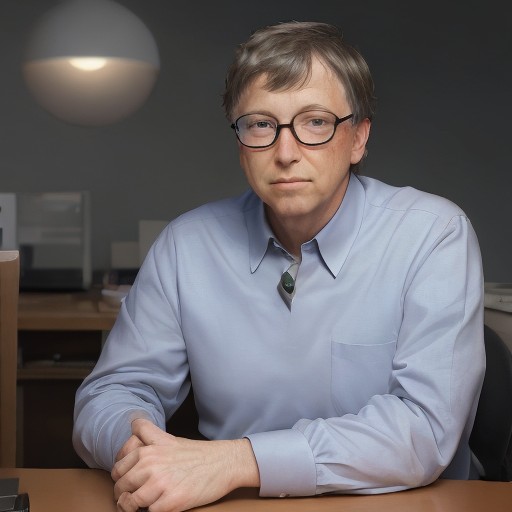
Introduction: A Visionary’s Journey
Born on October 28, 1955, Bill Gates has transcended his role as a mere business magnate to become an enduring symbol of innovation and philanthropy. Co-founding Microsoft with childhood friend Paul Allen, Gates revolutionized the tech industry, creating products that would eventually find their way into billions of homes worldwide. However, as we navigate the complexities of the 21st century, Gates’ legacy is not without its controversies. This article delves into the multifaceted life of Bill Gates, exploring his monumental achievements, philanthropic endeavors, and the heated discussions surrounding his influence on global affairs.
The Rise of Microsoft: A Tech Titan is Born
In 1975, Gates and Allen launched Microsoft, propelling themselves into the tech stratosphere. Their vision was simple yet profound: to put a computer on every desk and in every home. By the early 1990s, Microsoft had become synonymous with personal computing, dominating the software market with Windows operating systems and Office productivity suites.
But success did not come without its challenges. Microsoft faced intense scrutiny and legal battles, particularly regarding antitrust concerns. In the late 1990s, the Department of Justice accused Microsoft of maintaining a monopoly. This contentious period raised questions about corporate ethics and the responsibilities of tech giants in a rapidly evolving landscape.
Philanthropy: The Gates Foundation’s Impact
After stepping down from his day-to-day role at Microsoft, Gates redirected his focus towards philanthropy. In 2000, he and Melinda French Gates established the Bill and Melinda Gates Foundation, which has since become one of the largest private charitable foundations in the world. With an endowment of over $50 billion, the foundation aims to address critical issues such as global health, education, and poverty alleviation.
One of the most notable initiatives has been the fight against infectious diseases. The foundation has invested billions in vaccine development and distribution, particularly in developing countries. During the COVID-19 pandemic, Gates emerged as a prominent advocate for global vaccination efforts, emphasizing the need for equitable access to vaccines for all.
Controversies and Criticism: The Double-Edged Sword of Philanthropy
Despite his philanthropic efforts, Gates has faced significant criticism. Some argue that his wealth provides him with disproportionate influence over global health policies. Critics contend that billionaires should not have the power to shape public health agendas, raising ethical questions about the role of philanthropy in society.
Additionally, Gates has been accused of promoting a neoliberal agenda through his philanthropy. The foundation’s focus on market-driven solutions has sparked debates about the effectiveness and ethics of privatizing public health initiatives. This shift towards privatization raises concerns about accountability and the potential sidelining of government responsibilities.
The Future of Philanthropy: Gates’ Vision in a Changing World
As we look to the future, Bill Gates’ role in philanthropy and technology becomes even more critical. With the rise of new global challenges—climate change, economic inequality, and technological disruption—Gates is at the forefront, advocating for innovative solutions. His recent focus on climate change reflects a growing awareness that addressing environmental issues is integral to global health and economic stability.
In 2021, Gates released the book “How to Avoid a Climate Disaster,” outlining a blueprint for reducing greenhouse gas emissions. The implications of his proposals have sparked discussions about the balance between innovation and regulation, as well as the role of technology in solving environmental crises.
Public Perception: The Gates Effect
Public opinion on Bill Gates is as varied as his accomplishments. For many, he embodies the archetype of the self-made billionaire who has dedicated his life to giving back. Yet, for others, he represents the pitfalls of unchecked wealth and influence. The rise of conspiracy theories surrounding Gates, particularly during the pandemic, highlights the polarized views on his character and motives.
The “Gates Effect” refers to how individuals perceive his actions—celebrated by some as groundbreaking and criticized by others as self-serving. The discourse surrounding Gates encourages a broader conversation about the role of wealthy individuals in shaping societal norms and policies.
Conclusion: A Legacy in the Balance
Bill Gates stands as a complex figure whose legacy is still being written. His contributions to technology and philanthropy are undeniably profound, but the controversies surrounding his influence and approach to global issues raise essential questions about the future of philanthropy and the ethical responsibilities of the wealthy.
As Gates continues to navigate his role in a rapidly changing world, it is clear that the implications of his work will resonate for generations. Will he be remembered as a visionary who harnessed his wealth for the greater good, or as a symbol of the pitfalls of concentrated power in philanthropy? Only time will tell, but one thing is certain: the discussion surrounding Bill Gates will remain a hot topic as we grapple with the complexities of wealth, influence, and social responsibility.
Join the Conversation
What are your thoughts on Bill Gates’ influence in technology and philanthropy? Do you believe that billionaires should have a significant role in shaping global policies? Share your opinions and let’s discuss the implications of Gates’ legacy in our ever-evolving world.


