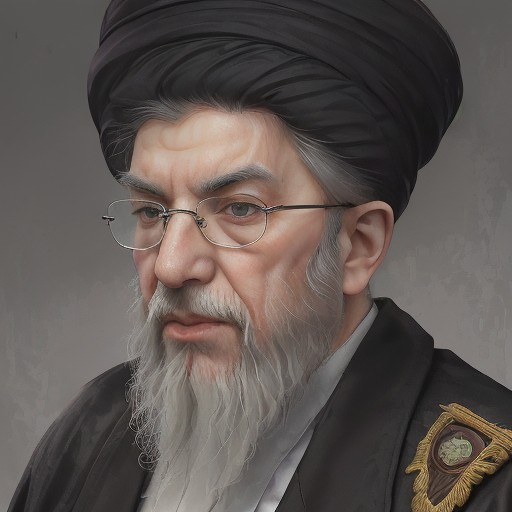
The Man Behind the Myths: Who Is Ayatollah Ali Khamenei?
As the Supreme Leader of Iran since 1989, Ayatollah Ali Khamenei has been a pivotal figure in shaping the political and religious landscape of the nation. His tenure has seen a mix of fervent nationalism, ideological battles, and an unwavering stance against Western influence. Recently, however, Khamenei has found himself at the center of a whirlwind of rumors, with whispers circulating on social media that he was either in a coma or had passed away. These claims, often amplified by geopolitical tensions, reflect the anxiety and uncertainty that many feel about Iran’s future.
The Recent Rumors: Fact or Fiction?
On November 17, 2024, a photograph emerged of Khamenei engaging in a discussion with Iran’s Ambassador to Lebanon, Mojtaba Amani, in his office. This image served as a powerful rebuttal to the swirling rumors that suggested the Supreme Leader’s health was deteriorating. The timing of these rumors could not be more significant, given the heightened tensions between Iran and Israel.
With Khamenei’s recent public appearance, it appears that the Supreme Leader is not only alive but also actively engaged in Iran’s foreign policy directives. This dispels fears that his absence could lead to a power vacuum or instability within the Iranian regime, a prospect that many in the West have speculated about.
Khamenei’s Stance on Regional Tensions
In recent statements, Khamenei has expressed strong opposition to Israeli actions, urging regional terror groups to resist what he perceives as aggression. His rhetoric has been particularly pointed, reflecting Iran’s long-standing ideological conflict with Israel. As tensions between the two nations escalate, Khamenei’s leadership becomes increasingly significant; he remains the final arbiter of Iran’s response to external threats.
In private communications relayed through senior advisers, Khamenei has reportedly encouraged Hamas to consider ceasefire terms, a surprising twist given the historical context of Iran’s support for militant groups. This shift suggests a calculated approach to mitigate conflict while maintaining Iran’s influence in the region.
The Implications of Khamenei’s Leadership
Khamenei’s ability to navigate these turbulent waters is indicative of his political acumen. As Iran’s Supreme Leader, he holds the ultimate authority over all state matters, a role that has been both a source of power and controversy. His decisions affect not only Iranian citizens but also have far-reaching implications for international relations, particularly concerning the West and regional adversaries.
With the recent rumors surrounding his health, the question arises: what would happen if Khamenei were no longer at the helm? Speculation about succession and the potential for internal strife within Iran’s Shiite theocracy has been a topic of discussion among analysts for years. Any shift in leadership could lead to a significant recalibration of Iran’s domestic and foreign policies.
The Role of Social Media in Shaping Narratives
The rise of social media has transformed how information—and misinformation—is disseminated. In the case of Khamenei, platforms like Twitter and Facebook have been instrumental in spreading rumors that can destabilize public perception. The rapid circulation of news, whether true or false, creates a climate of uncertainty, which can be as dangerous as the events themselves.
Despite the official image of strength projected by Khamenei and his administration, the susceptibility to rumors indicates a vulnerability within the regime. The Iranian government has historically struggled with transparency, and the lack of clear communication regarding Khamenei’s health only fuels speculation.
Public Perception and the Future of Iran
As Khamenei continues to assert his influence, public perception plays a crucial role in his leadership. The Iranian populace, which has faced years of economic challenges and international sanctions, is increasingly disillusioned. Protests and dissent have erupted over various issues, from economic hardship to social freedoms. Khamenei’s image as a strong leader is tested against the backdrop of citizens’ frustrations.
The recent rumors about his health may have inadvertently highlighted the fragility of the regime’s control over public opinion. With political dissent growing, Khamenei’s handling of both internal and external pressures will be closely watched. His ability to maintain authority while addressing the needs of the Iranian people will ultimately determine the future of his leadership.
What Lies Ahead for Khamenei and Iran?
The enduring question remains: what does the future hold for Ayatollah Ali Khamenei and Iran? With tensions in the region continuing to simmer, the Supreme Leader’s role will be pivotal. His recent meetings and statements suggest a leader still very much in control, but the persistent rumors about his health reflect a deeper unease.
As Iran navigates a complex geopolitical landscape, Khamenei’s decisions will shape not only the future of Iran but also its relations with the world. The implications of his leadership extend beyond national borders, affecting global security and economic stability.
Conclusion: The Legacy of a Supreme Leader
In the grand narrative of Iranian politics, Ayatollah Ali Khamenei stands as a figure of resilience, controversy, and authority. His ability to confront rumors and maintain his influence amid regional turmoil speaks to his political savvy. As the Supreme Leader, he embodies the complexities of Iranian society, where faith, politics, and national identity intertwine.
The world watches as Khamenei continues to navigate the challenges that come with his role. The recent rumors may have threatened to undermine his authority, but they also highlight the significance of leadership in times of uncertainty. As Iran moves forward, one thing remains clear: Khamenei’s legacy will be defined by how he manages the delicate balance between power and the will of the people.


