
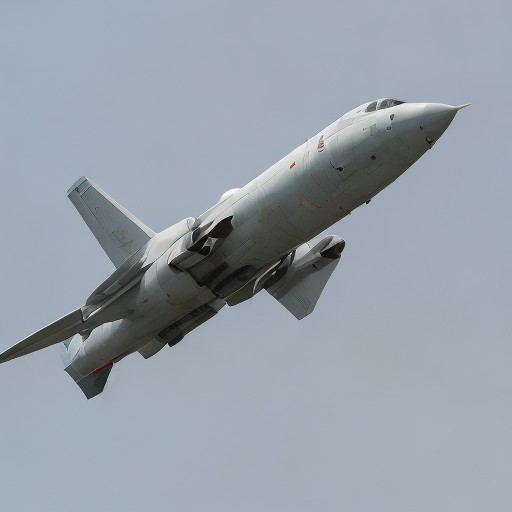
The Rise of DRDO: India’s Defense Powerhouse
The Defence Research and Development Organisation (DRDO) has been making headlines recently with a flurry of successful missile tests and groundbreaking defense technologies. As India navigates an increasingly complex geopolitical landscape, these developments underscore the nation’s commitment to enhancing its military capabilities. With the DRDO at the helm, India is poised to become a formidable force in the realm of defense innovation.
VSHORADS Missile: A Game Changer in Air Defense
In a significant boost to India’s air defense strategy, the DRDO recently conducted three successful tests of the Very Short Range Air Defence System (VSHORADS) in the arid landscapes of Rajasthan’s Pokhran range. These tests were not merely a demonstration of technological prowess; they aimed to validate a missile system designed to operate in short-range environments, crucial for protecting vital assets against aerial threats.
This cutting-edge missile system, capable of engaging multiple targets simultaneously, is expected to enhance the capabilities of Indian armed forces, especially in scenarios involving low-flying aircraft and drones. The successful tests highlight DRDO’s relentless pursuit of innovation and its commitment to ensuring national security.
VL-SRSAM: The Future of Naval Defense
The collaboration between DRDO and the Indian Navy has borne fruit with the successful flight test of the Vertical Launch Short Range Surface-to-Air Missile (VL-SRSAM) off the coast of Odisha. This test validated key components of the weapon system, including the proximity fuse and seeker, confirming its effectiveness against high-speed aerial threats.
The potential implications of this successful test are far-reaching. As tensions simmer in the Indian Ocean region, the VL-SRSAM stands as a robust line of defense against aerial attacks, providing Indian naval forces with a significant tactical advantage. It’s a classic case of innovation meeting necessity, and the implications for regional security are profound.
RudraM-II: Precision Strikes from the Skies
In another remarkable development, India successfully tested the RudraM-II air-to-surface missile from a Su-30 fighter jet over the waters of Odisha. This missile, designed for precision strikes against ground targets, met all trial objectives, validating its propulsion system and control guidance algorithm.
The successful test of the RudraM-II not only showcases DRDO’s engineering capabilities but also signals India’s intent to enhance its strike capabilities. As the geopolitical climate continues to evolve, the ability to launch precision strikes from a fighter jet is a game-changer, raising questions about deterrence and power dynamics in the region.
P-7 Parachute System: A Leap in Aerial Logistics
While much of the focus is on missile systems, DRDO is also making strides in aerial logistics. Recently, the Authority Holding Sealed Particulars (AHSP) of the P-7 Parachute System was handed over to the Directorate General of Quality Assurance (DGQA). This system can safely drop payloads of up to 9.5 tonnes from IL-76 aircraft, demonstrating DRDO’s versatility in addressing diverse defense needs.
The implications of this advancement are noteworthy. As military operations become more complex, the ability to rapidly deploy supplies and equipment can make the difference in critical situations. The P-7 Parachute System not only enhances operational capabilities but also underscores India’s commitment to modernizing its defense logistics.
Pinaka Rocket System: Expanding the Arsenal
In a bold move to bolster its artillery capabilities, DRDO plans to expand the Pinaka Rocket System with three extended range variants. This development is particularly significant in the context of India’s strategic posture against neighboring countries like Pakistan and China.
The expansion of the Pinaka system raises important questions about regional stability. While it undoubtedly strengthens India’s defense posture, it may also trigger an arms race in the region. As neighboring nations respond to India’s advancements, the balance of power in South Asia could be significantly altered, leading to heightened tensions.
The Bigger Picture: DRDO’s Role in National Security
The recent developments at DRDO are not just technical achievements; they represent India’s broader strategy to enhance its military capabilities and assert its position on the global stage. As the organization continues to innovate, it is also engaging in joint ventures with international entities, further bolstering national security.
The implications of these advancements are multifaceted. On one hand, they enhance India’s deterrence capabilities and readiness. On the other, they contribute to an arms race that could destabilize the region. As India navigates these challenges, the role of DRDO becomes even more critical.
Public Perception: Mixed Reactions to Military Advancements
While the advancements made by DRDO are celebrated by many as a testament to India’s growing technological prowess, there are also voices of caution. Critics argue that the focus on military capabilities could divert resources from pressing social issues, such as poverty alleviation and education.
This dichotomy raises important questions about national priorities. Should India continue to invest heavily in defense technologies, or should it redirect some of those funds toward social development? The conversation surrounding these issues is becoming increasingly relevant as India grapples with its identity as a rising power.
Conclusion: A New Era of Defense Innovation
The recent achievements of DRDO signify a new era of defense innovation for India. As the organization continues to break new ground with missile tests and technological advancements, the implications for national and regional security will be profound. Whether these strides lead to greater stability or increased tensions in the region remains to be seen.
As readers, it is essential to engage in discussions about the balance between military advancement and social responsibility. The choices made today will shape the future of India and its role in the global arena. Will DRDO’s innovations lead to a more secure India, or will they fuel an arms race that could have devastating consequences? The answer lies in how these technologies are perceived and utilized in the coming years.


