
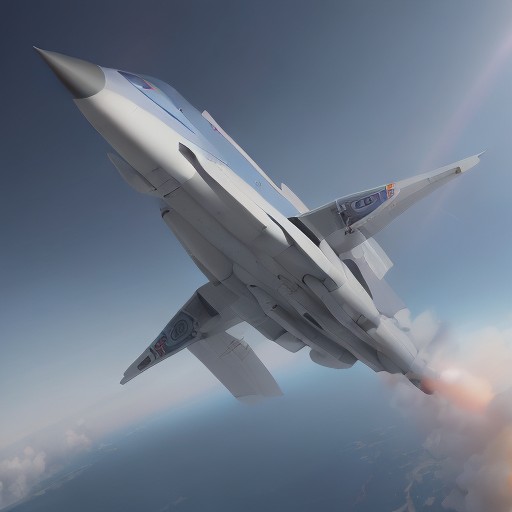
The Rise of Hypersonic Missiles: A Game Changer in Modern Warfare
As the world grapples with escalating military tensions and evolving warfare strategies, a new class of weaponry has emerged that is set to redefine the landscape of global defense: hypersonic missiles. These advanced missiles, capable of traveling at speeds exceeding Mach 5, represent a significant leap forward from traditional cruise missiles, which typically operate at subsonic speeds. Nations across the globe are racing to develop and deploy these formidable weapons, with recent tests highlighting their potential to alter military balances and spark geopolitical unrest.
India Joins the Hypersonic Race
In a landmark achievement, India has successfully conducted its first long-range hypersonic missile test, marking its entry into the exclusive club of nations with such capabilities. The test, conducted by India’s Defence Research and Development Organisation (DRDO), demonstrates a remarkable military advantage, as the hypersonic missile’s unparalleled speed makes it a challenging target for traditional missile defense systems.
This groundbreaking DRDO hypersonic missile test not only showcases India’s growing technological prowess but also serves as a strategic counterbalance in a region marked by increasing tensions. With neighboring nations ramping up their military capabilities, India’s advancements in hypersonic technology signal a shift in the dynamics of South Asian security.
N. Korea’s Ambitious Hypersonic Developments
While India celebrates its achievements, North Korea is also making headlines with its hypersonic missile tests. Recently, the rogue state successfully launched a multiwarhead missile, a sophisticated weapon designed to overwhelm missile defenses in the region. The test revealed North Korea’s ability to separate and control individual warheads, showcasing a level of technological advancement that raises alarms among its neighbors and the international community.
These developments have rekindled concerns about regional security and the potential for an arms race, as North Korea continues to defy international norms and pursue its missile program aggressively. The implications of such advancements are far-reaching, potentially destabilizing an already volatile region and complicating diplomatic efforts.
Russia Unleashes the Oreshnik Hypersonic Missile
Adding fuel to the fire, Russia has recently unveiled its own hypersonic missile, the Oreshnik, which has reportedly been tested successfully in combat scenarios. President Vladimir Putin has asserted that Russia is prepared to continue testing and deploying this weapon, which can reach speeds of over 13,000 kph. The Oreshnik’s capability to carry multiple warheads and strike various targets simultaneously has raised eyebrows among military analysts worldwide.
Russia’s use of the Oreshnik missile in conflict zones, particularly in Ukraine, underscores the pressing need for nations to develop robust air defense systems capable of countering such advanced threats. As tensions escalate, the ramifications of hypersonic technology extend beyond military capabilities; they also pose serious challenges to international security and strategic stability.
Global Competition: The Hypersonic Arms Race
The race to develop hypersonic missiles is not limited to India, North Korea, and Russia. Major world powers, including the United States and China, are also heavily invested in this technology. The rapid advancement of hypersonic capabilities by these nations underscores a broader trend of militarization and competition that has significant implications for global security.
As countries ramp up their hypersonic programs, the potential for miscalculations and misunderstandings increases. The stakes are high, and the race to achieve hypersonic superiority could lead to an arms buildup that destabilizes entire regions. Nations must navigate these treacherous waters carefully, balancing military ambitions with diplomatic efforts to prevent conflict.
The Strategic Importance of Hypersonic Missiles
Hypersonic missiles represent a critical evolution in warfare, offering unique capabilities that can dramatically alter traditional military strategies. Their high speed and maneuverability make them exceptionally difficult to detect and intercept, posing a significant challenge to existing missile defense systems. As a result, countries that possess hypersonic technology gain a strategic edge over their adversaries.
Moreover, the psychological impact of hypersonic missiles cannot be underestimated. The mere possession of such advanced weaponry can serve as a deterrent, altering the calculus of military engagement and influencing diplomatic negotiations. As nations continue to invest in hypersonic technology, the balance of power in international relations may shift dramatically.
The Implications of Hypersonic Advancement
The rapid advancement in hypersonic missile technology poses significant strategic and security challenges globally. With nations leveraging these capabilities to enhance their military posture, the potential for conflict increases. The implications of these developments are profound, raising questions about the future of arms control and international security.
As countries like India and Russia push the boundaries of hypersonic technology, the international community must grapple with the consequences. Will these advancements lead to a new arms race, or can diplomatic channels be established to curb the proliferation of such weapons? The stakes have never been higher, and the answers remain uncertain.
Conclusion: A Call for Caution and Cooperation
The emergence of hypersonic missiles marks a new era of warfare that demands careful consideration from global leaders. As nations race to develop these advanced weapons, the need for dialogue and cooperation becomes increasingly urgent. The potential for miscalculation and escalation is real, and the world must work together to address the challenges posed by hypersonic technology.
In this fast-paced environment, countries must prioritize transparency and communication to prevent misunderstandings that could lead to conflict. The future of global security hinges on our ability to navigate these complexities with foresight and responsibility, ensuring that the advancements in hypersonic missile technology do not spiral into a catastrophic arms race.


