
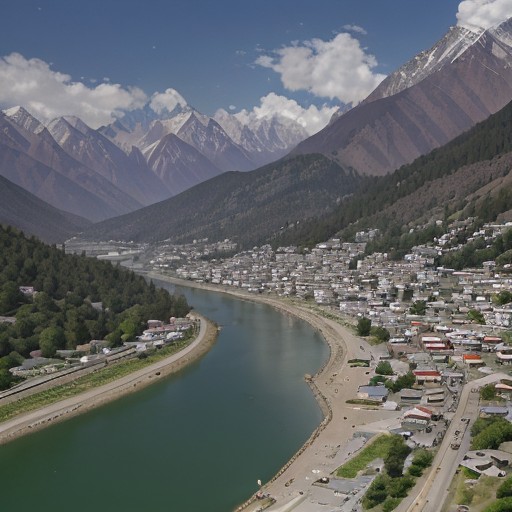
Introduction: The Crucial Crossroads of Jammu and Kashmir
The picturesque region of Jammu and Kashmir, often dubbed the “Paradise on Earth,” finds itself at a pivotal juncture in its tumultuous history. Recent political developments have sparked renewed hopes for the restoration of statehood and the special status that was revoked in 2019. With the new assembly now in session, citizens and political leaders alike are fervently advocating for a future that honors the unique identity, culture, and rights of the Kashmiri people. This article dives deep into the latest events shaping Jammu and Kashmir, exploring the implications of these changes on the ground.
Political Developments: A Struggle for Statehood
In a significant move, the Jammu and Kashmir Assembly has passed a resolution urging the central government to restore the statehood that was stripped away in 2019. The resolution, championed by Deputy Chief Minister Surinder Choudhary, reflects the deep-seated desire among the populace and their representatives to reclaim constitutional guarantees that safeguard their identity. The BJP’s opposition to this resolution raises questions about the future of political discourse in the region.
With the recent assembly elections concluding, the National Conference (NC) emerged victorious, securing 42 out of 90 seats. Omar Abdullah, a prominent face in Kashmiri politics, has been appointed as the Chief Minister. This victory is seen as a mandate from the people, empowering Abdullah to negotiate with the central government for the restoration of statehood—a pressing demand resonating throughout the region.
Lieutenant Governor’s Role: A Step Towards Healing
In a notable endorsement of the assembly’s resolution, Lieutenant Governor Manoj Sinha has approved the cabinet’s request to push for the restoration of statehood. This endorsement is crucial, as it signals a potential thawing of relations between the local government and the central authorities. Many view this approval as a vital step towards healing the rifts that have plagued Jammu and Kashmir since the abrogation of Article 370.
Security and Law and Order: A Fragile Balance
Amid these political shifts, the security scenario in Jammu and Kashmir remains a topic of concern. The Indian Army and police forces have ramped up search operations to apprehend suspects linked to recent terror attacks, underscoring the ongoing security challenges in the region. The National Investigation Agency (NIA) has also intensified its efforts, attaching properties of key suspects involved in violent incidents, including the tragic killings of two non-locals.
In a separate incident, the region experienced a 5.2 magnitude earthquake, fortunately resulting in no casualties or significant damage. Such events highlight the unpredictable nature of life in Jammu and Kashmir, where the threat of violence and natural disasters alike loom large over daily existence.
Legislative Developments: New Leadership and Fresh Resolutions
The recent assembly session, which commenced on November 4, marked a historic moment for Jammu and Kashmir politics. Veteran leader Abdul Rahim Rather was elected as the Speaker of the Jammu and Kashmir Legislative Assembly. The assembly’s first session has garnered attention, with discussions centering around the critical resolution demanding the restoration of statehood and special status.
In a show of solidarity, the Jammu and Kashmir Pradesh Congress Committee (JKPCC), led by Tariq Hameed Karra, has backed the statehood resolution. Karra’s assertion that the restoration of statehood is the only viable demand left, especially following the Supreme Court’s verdict on the abrogation of Article 370, reflects a growing consensus among regional parties on this matter.
Public Sentiment: A Resounding Call for Justice
As the political landscape evolves, public sentiment in Jammu and Kashmir is increasingly vocal. Senior Congress leader P Chidambaram has emphasized the urgent need for the immediate restoration of full statehood, describing the current situation as “half a state.” This sentiment resonates powerfully among the populace, who feel marginalized and disenfranchised in the aftermath of the 2019 abrogation.
Additionally, members from the People’s Democratic Party (PDP) and the Peoples’ Conference have submitted resolutions demanding the immediate restoration of Articles 370 and 35A in their original form. This collective push for constitutional rights reflects a growing momentum among political leaders to address the grievances of the people and restore faith in democratic processes.
Conclusion: A Future Uncertain Yet Hopeful
As Jammu and Kashmir stands at this crucial crossroads, the interplay of political dynamics, public sentiment, and security concerns shapes an uncertain yet hopeful future. The demand for the restoration of statehood and special status is not merely a political issue; it is a question of identity, rights, and dignity for the people of Jammu and Kashmir. The ongoing discussions, coupled with the mounting pressure from various political factions, suggest that the narrative surrounding Jammu and Kashmir is far from over.
In the coming weeks and months, as the assembly engages in crucial dialogues and negotiations, the eyes of the nation will be fixed on this beleaguered yet resilient region. Will the government heed the calls for justice and restoration? Or will Jammu and Kashmir continue to navigate the stormy waters of political uncertainty? Only time will tell, but one thing is clear—the fight for identity and rights in Jammu and Kashmir is far from finished.


