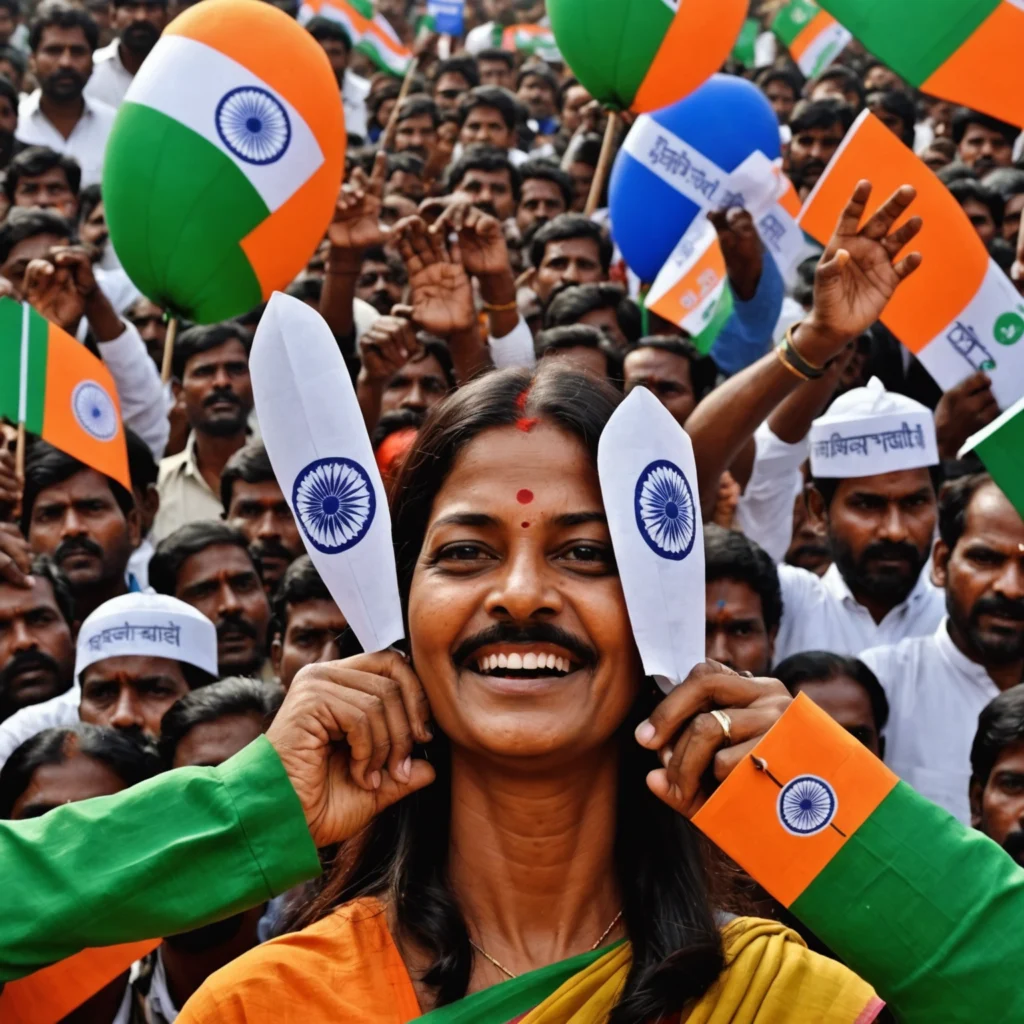
Introduction: The Battle for Jharkhand’s Future
The ongoing assembly elections in Jharkhand have turned into a high-stakes contest, captivating the attention of voters and political analysts alike. The first phase kicked off on November 13, 2023, with a remarkable voter turnout of 64.86% by 5 pm across 43 constituencies, overshadowing the previous election’s turnout of 63.9% in 2019. What does this surge in voter participation signify for the political landscape of Jharkhand?
Voter Turnout: A Sign of Engagement
The impressive voter turnout in the first phase of the Jharkhand assembly elections is a clear indication of the public’s engagement and interest in the political process. With such a significant turnout, analysts speculate that the electorate is eager for change, or perhaps, a reaffirmation of their current government. This level of participation is unprecedented and could signal a shift in the political dynamics of the state.
Political Parties Go Head-to-Head: Allegations Fly
As the election heats up, the political atmosphere is charged with accusations and counter-accusations. The Bharatiya Janata Party (BJP) has unleashed a blistering attack on the opposition, alleging corruption and suggesting that their governance could turn Jharkhand into a “den of Naxals.” The BJP’s claims focus on the perceived failure of the Jharkhand Mukti Morcha (JMM)-led government to effectively utilize central funds, which they argue has led to mismanagement of development projects and facilitated illegal immigration.
In a robust defense, the ruling JMM has countered these allegations, emphasizing their commitment to the state’s development. However, opposition parties have seized the opportunity to highlight the government’s shortcomings, particularly regarding the management of central resources. The political mudslinging is not just a distraction; it is a critical aspect of the narrative shaping the elections.
Promises and Manifestos: The BJP’s Bold Agenda
In a bid to sway voters, Union Home Minister Amit Shah unveiled the BJP’s manifesto for Jharkhand, which promises to preserve tribal identity while implementing a Uniform Civil Code. Shah asserted that tribal rights would remain intact under this new framework, a statement that has drawn both support and skepticism from various quarters.
The manifesto also promises to expand the Public Distribution System (PDS) to include an additional 10 lakh people, a move that could have significant implications for food security in the state. Furthermore, the BJP intends to identify and deport illegal immigrants, a contentious issue that resonates deeply with certain voter segments. Will these promises resonate with the electorate, or will they be met with resistance?
High-Profile Candidates: Wealth Meets Politics
This election cycle is also notable for the number of affluent candidates in the fray. A staggering 127 crorepati candidates are contesting, with the Samajwadi Party’s Aquil Akhtar emerging as the wealthiest, boasting assets worth around Rs 400 crore. This raises questions about the role of wealth in politics and whether these candidates can genuinely address the issues faced by the average voter.
As the campaign progresses, the presence of wealthy candidates may influence voter perceptions and choices. Are voters likely to trust candidates who come from affluent backgrounds, or will they seek representatives who understand their struggles firsthand?
Congress’s Challenge: Holding the BJP Accountable
Meanwhile, the Congress party is not standing idle. Leader Jairam Ramesh has been vocal in questioning Prime Minister Narendra Modi‘s commitments made during his visits to Jharkhand, particularly focusing on the central government’s dues to the state. This tactic aims to remind voters of the BJP’s promises and their perceived failures.
The Congress party’s strategy seems to hinge on portraying the BJP as out of touch with local realities. As they rally support, the effectiveness of this approach will be tested in the coming phases of the election.
The Implications of a High Voter Turnout
The soaring voter turnout could have profound implications for the outcome of the elections. It may indicate a desire for change among the electorate, as well as dissatisfaction with the status quo. Political analysts are already speculating on the potential shifts in power dynamics within the state, and whether the current government can retain its grip on power amidst growing public scrutiny.
What Lies Ahead: A Divided Political Landscape
As the elections progress, the political landscape in Jharkhand is becoming increasingly polarized. The BJP, JMM, and Congress are locked in a fierce battle, each vying to capture the hearts and minds of the voters. The ongoing allegations, promises, and high-profile candidates are shaping the narrative, and the stakes have never been higher.
Conclusion: The Road to Election Day
With the first phase of voting complete, all eyes are now on the subsequent phases of the Jharkhand assembly elections. The remarkable voter turnout reflects a populace eager for change and a political atmosphere rife with tension and drama. As political parties continue to clash and campaign fervently, the implications of this election will resonate far beyond the state’s borders. Jharkhand’s future hangs in the balance, and the coming days will reveal whether the electorate chooses to uphold the current regime or pave the way for a new chapter in the state’s governance.
In this critical moment, the question remains: Will Jharkhand embrace a fresh start, or continue down its current path? The answer lies in the hands of its voters.


