
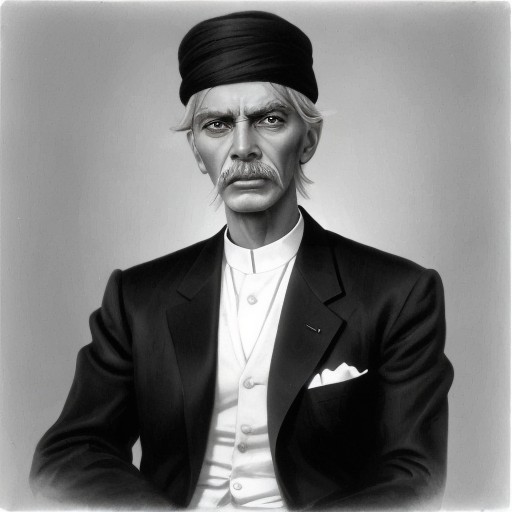
The Many Faces of Jinnah: From Historical Icon to Contemporary Controversies
The name “Jinnah” resonates deeply across various spheres, intertwining historical significance with contemporary issues. From the arrest of Mohammed Ali Jinnah in Tamil Nadu to the ongoing turmoil in Balochistan, Pakistan, the implications of this name are more multifaceted than one might initially perceive. As we delve into the various contexts in which “Jinnah” is referenced today, we uncover a rich tapestry of events that are both newsworthy and contentious.
Arrest in Tamil Nadu: A Shocking Development
In a startling turn of events, the National Investigation Agency (NIA) apprehended Mohammed Ali Jinnah in Tamil Nadu. He is accused of providing refuge to a fugitive involved in the 2019 murder of Ramalingam, a staunch opponent of the banned outfit Popular Front of India (PFI). Ramalingam’s murder was a brutal act, orchestrated by individuals who viewed his opposition to conversion activities as a direct threat.
This arrest raises crucial questions about the ongoing tensions surrounding religious extremism and the role of organizations like PFI in India. Not only does it spotlight the need for heightened vigilance, but it also ignites a debate about how such groups are able to operate with relative impunity. The implications of this arrest extend beyond the individual, touching upon the broader societal issues of communal harmony and national security.
Balochistan: A Region in Crisis
Meanwhile, in Balochistan, Pakistan, violence has surged dramatically, culminating in a devastating explosion near the Jinnah International Airport. This tragedy, which claimed the lives of two Chinese nationals and injured 17 others, underscores the persistent instability in this strategic region. The attack targeted a convoy of Chinese workers, highlighting the precarious relationship between Pakistan and China, particularly in the context of the China-Pakistan Economic Corridor (CPEC).
The Pakistani government’s response has been swift, initiating a comprehensive military operation against militant groups that threaten not only local security but also international investments. The crisis in Balochistan raises critical questions about governance, the effectiveness of military interventions, and the potential for long-term peace in a region plagued by dissent and violence.
Jinnah’s Legacy in Education and Modernity
While the name “Jinnah” has recently been associated with controversy, it is also emblematic of Pakistan’s rich historical legacy. Allama Muhammad Ali Jinnah, the founder of Pakistan, is revered as a symbol of independence and leadership. Recently, in Peshawar, students celebrated Jinnah’s legacy during a school ceremony where the mayor urged the youth to excel in modern fields such as information technology and artificial intelligence.
This nod to Jinnah’s enduring influence reflects a desire to bridge the gap between Pakistan’s historical identity and its aspirations for a modern digital ecosystem. However, this juxtaposition also provokes a critical conversation about how well the nation is fulfilling Jinnah’s vision of a progressive and inclusive society.
Airports, Airlines, and the Name That Unites
Interestingly, the name “Jinnah” also finds representation in Pakistan’s aviation sector. Although Allama Iqbal International Airport in Lahore is not named after him, it plays host to various airlines, including Pakistan International Airlines (PIA), which honors Jinnah’s legacy. Furthermore, Fly Jinnah, a budding airline, is listed in the arrivals and departures schedule, illustrating how the name continues to be relevant in contemporary contexts.
This connection between Jinnah and the aviation industry serves as a reminder of his lasting impact on the nation’s identity. Yet, it also raises questions about how effectively the country can leverage this historical significance to foster growth and innovation in sectors like tourism and trade.
The Implications of Jinnah’s Name in Today’s Society
The various contexts in which “Jinnah” is invoked—from criminal investigations to educational initiatives—invite us to consider the implications of his legacy in today’s society. On one hand, the arrest of Mohammed Ali Jinnah in Tamil Nadu signals a worrying trend of rising extremism and its potential spillover effects across borders. On the other hand, the acknowledgment of Allama Muhammad Ali Jinnah’s contributions to education and modern technology highlights an aspiration for growth and progress.
This duality presents a critical challenge: How can societies that revere historical figures like Jinnah reconcile their legacies with the pressing issues of the present? The answer may lie in a collective commitment to fostering dialogue, promoting inclusivity, and prioritizing development that honors the foundational principles of freedom and unity.
Public Reactions and Speculations
As news of Mohammed Ali Jinnah’s arrest spreads, public reactions are varied and fervent. Supporters argue that such actions are necessary to combat extremism, while critics voice concerns over potential overreach and the implications for civil liberties. Social media platforms are abuzz with opinions, and the incident has sparked a broader conversation about the role of law enforcement in addressing religious intolerance.
In Balochistan, the explosion has evoked outrage and fear, with calls for enhanced security measures and more robust governmental interventions. The relationship between Pakistan and China has also come under scrutiny, leading to speculations about the potential impact on future investments and economic partnerships.
The Future of Jinnah’s Legacy: A Balancing Act
As we navigate the complexities surrounding the name “Jinnah,” it becomes increasingly clear that his legacy is both a source of pride and a point of contention. The juxtaposition of historical reverence with contemporary challenges prompts a critical examination of how societies can honor their past while forging a path toward a more inclusive future.
In this balancing act, the name “Jinnah” serves as a reminder of the power of legacy—its ability to inspire, provoke, and unite. Whether through the lens of criminal justice, education, or international relations, the name continues to shape narratives and ignite discussions that are essential for the growth of societies.
Conclusion: Embracing the Complexity of Jinnah’s Legacy
In conclusion, the name “Jinnah” embodies a multifaceted legacy that is as relevant today as it was in the past. From the arrest of Mohammed Ali Jinnah in Tamil Nadu to the ongoing crises in Balochistan and the celebration of Allama Muhammad Ali Jinnah’s contributions to modern education, the name invites us to engage in a dialogue about identity, history, and the future.
As we reflect on these various contexts, we must embrace the complexity of Jinnah’s legacy, recognizing that it is woven into the very fabric of our societies. Only through open discussions and a commitment to understanding can we honor this legacy while addressing the pressing issues that confront us today.


