
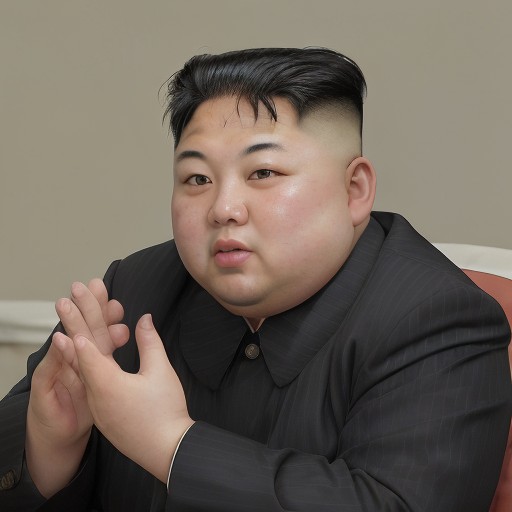
The Rise of Kim Jong Un: A Supreme Leader’s Journey
Since he took the reins of North Korea in December 2011, Kim Jong Un has transformed the hermit kingdom into one of the most controversial nations on the global stage. Assumed to be a puppet leader upon his ascent, he has since proven to be anything but. As the General Secretary of the Workers’ Party of Korea and the Supreme Leader, Kim has embarked on a path that has not only accelerated North Korea’s nuclear and missile programs but also heightened tensions with the international community.
Nuclear and Missile Program: A Daunting Display of Power
In recent months, Kim Jong Un has showcased North Korea’s advancing nuclear capabilities, making headlines with provocative missile tests. These actions have raised alarm bells in South Korea, the United States, and Japan, as the world watches with bated breath. The recent intercontinental ballistic missile (ICBM) launch in October was not merely a demonstration of military prowess; it was a stark reminder of the North’s intentions and its willingness to defy international norms.
Experts suggest that these missile tests serve dual purposes: they are a show of strength for domestic audiences and a calculated provocation aimed at international adversaries. Kim’s strategy appears to hinge on the notion that a robust military presence will provide him with leverage in future negotiations, particularly regarding sanctions relief and recognition of North Korea as a nuclear power.
Military Partnerships: Troops on Foreign Soil
Adding to the complexity of the geopolitical landscape, reports indicate that North Korea has deployed thousands of troops to Russia to assist in its ongoing war against Ukraine. This unprecedented move has sparked outrage among Western leaders, including President Joe Biden and South Korean President Yoon Suk Yeol, who condemned the alliance between Moscow and Pyongyang. The implications of this military partnership are profound, suggesting a realignment of geopolitical alliances that could reshape security dynamics in Northeast Asia.
Analysts caution that this collaboration between North Korea and Russia could embolden Kim Jong Un to pursue more aggressive military actions, knowing he has a powerful ally backing him. Moreover, the infusion of North Korean troops into the Russian military effort raises questions about the potential for further escalation in Ukraine and the broader implications for global security.
Explosive Drones: The New Frontier of Warfare
In addition to conventional military advancements, Kim Jong Un is pivoting towards modern warfare strategies. North Korean state media recently reported that Kim has called for an accelerated mass production of explosive drones. This shift indicates a recognition of the evolving nature of combat, where technology plays a crucial role in military effectiveness.
The push for drone production is particularly concerning for neighboring countries, as these drones could be used for precision strikes or surveillance, further enhancing North Korea’s military capabilities. As other nations in the region bolster their defenses, the arms race in Northeast Asia is likely to escalate, with each side responding to perceived threats with increased military readiness.
The Global Response: A Diplomatic Quagmire
The actions of Kim Jong Un have left the international community grappling with how to respond effectively. The traditional approach of sanctions has proven largely ineffective, as North Korea continues to advance its military programs unabated. Critics argue that a more nuanced strategy is needed, one that combines diplomatic engagement with a firm stance on denuclearization.
However, the question remains: can the international community find common ground, or are we on the brink of a new Cold War? The complexities of international relations in this context cannot be overstated, as each country weighs its interests against the backdrop of a nuclear-armed North Korea.
The Implications for Regional Security
As Kim Jong Un continues to flex his military muscles, the implications for regional security are significant. South Korea has ramped up its defense initiatives, including missile defense systems and military exercises in coordination with the United States. Japan, too, is reassessing its defense posture in light of North Korea’s aggressive actions.
Furthermore, the potential for miscalculation in such a tense environment is dire. Any misstep by North Korea could trigger a swift response from its neighbors, leading to a catastrophic conflict that could engulf the entire region. The stakes have never been higher, and the world is left to wonder what Kim Jong Un’s next move will be.
The Future of Kim Jong Un’s Regime
As Kim Jong Un approaches over a decade in power, his regime’s future remains uncertain. While he has consolidated power and demonstrated a willingness to engage in military provocations, the sustainability of this approach is questionable. Economic challenges, exacerbated by sanctions and the COVID-19 pandemic, pose significant threats to his regime’s longevity.
Moreover, the increasing discontent among the North Korean populace, fueled by information leaks and a yearning for change, could pose a challenge to Kim’s grip on power. The interplay between military ambitions and domestic stability will be a critical factor in determining the future of his leadership.
Conclusion: A World on Edge
As we witness Kim Jong Un’s continued defiance and military escalation, the world stands on edge. The implications of his actions resonate far beyond the Korean Peninsula, affecting global alliances and security dynamics. The question remains: will the international community find a way to engage with North Korea constructively, or are we destined to watch as tensions spiral out of control?
Ultimately, the future of North Korea under Kim Jong Un is a precarious one, fraught with challenges and uncertainties. As the world watches, it is imperative that leaders act wisely and decisively to avert a crisis that could have devastating consequences for millions.


