
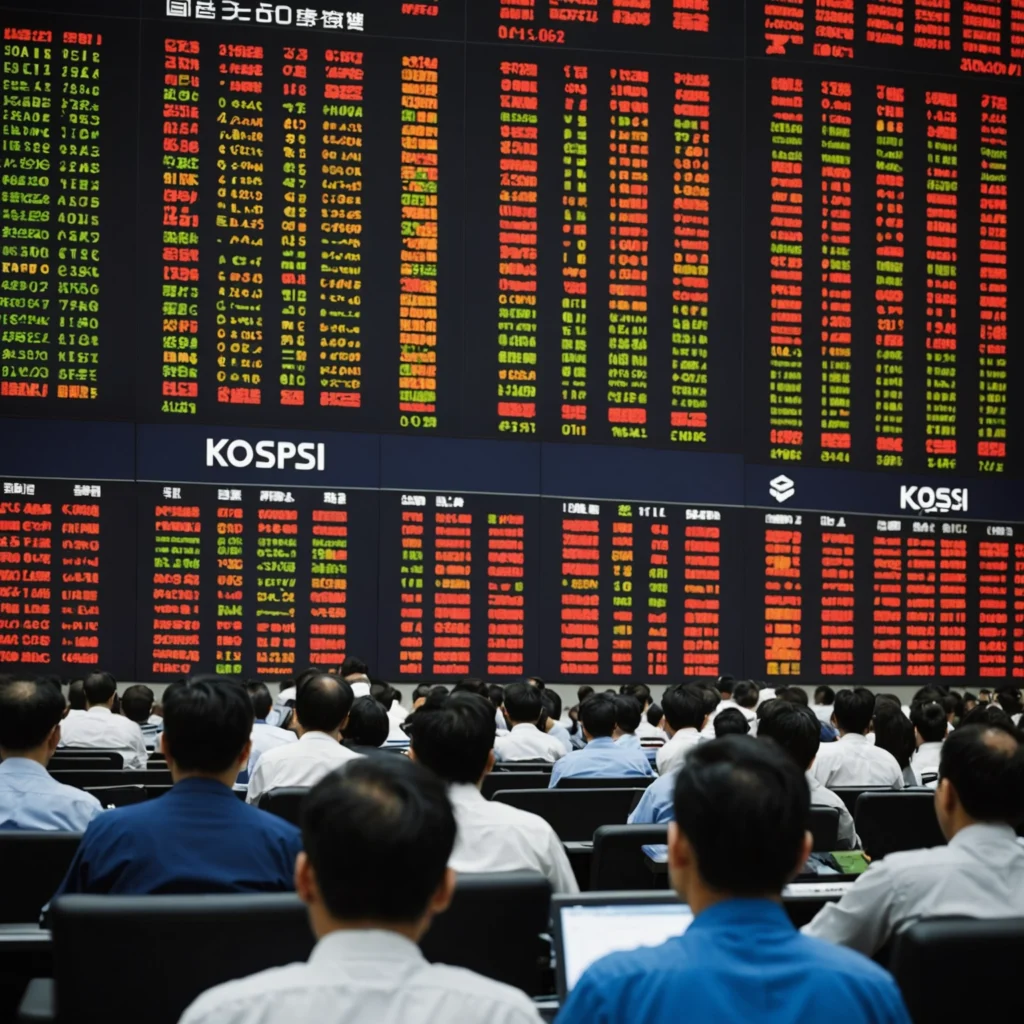
The Current State of the KOSPI Index
As of November 14, 2024, South Korea’s benchmark stock market index, the KOSPI, is at 2,418.86, marking a modest increase of 0.07% from the previous day. This slight uptick may appear insignificant at first glance, but it raises crucial questions about the underlying trends in the South Korean economy and the global market dynamics that influence it.
Understanding the KOSPI Index
The KOSPI Index, managed by the Korea Stock Exchange from its bustling Seoul campus, serves as a barometer for the South Korean stock market. It includes approximately 800 companies listed on the exchange and is critical for investors, analysts, and policymakers alike. Its fluctuations often reflect broader economic conditions, investor sentiment, and geopolitical events.
A Closer Look at Recent Trends
In recent months, the KOSPI Index has faced a rollercoaster of movements, influenced by various factors including international trade tensions, interest rate changes, and global economic uncertainties. Investors have shown a cautious optimism, which has contributed to the recent slight increase. But what does this trend signify?
The Implications of a 0.07% Increase
While a 0.07% increase might not seem like a cause for celebration, it could signify a potential turning point. Analysts suggest that even minor fluctuations can indicate shifting investor confidence. The question on everyone’s lips is: Is this the calm before a storm, or a sign of a more sustained recovery?
Market Reactions and Investor Sentiments
The KOSPI’s recent performance has sparked mixed reactions among investors. Some see this uptick as a beacon of hope amidst global uncertainties, while others remain skeptical, fearing that external factors could rapidly undo this progress. The ongoing U.S.-China trade negotiations and their implications for South Korean exports are at the forefront of these concerns.
Global Influences on the KOSPI
South Korea’s economy is deeply intertwined with global markets. Events such as the Federal Reserve’s monetary policy decisions and shifts in the Asian markets can have immediate impacts on the KOSPI Index. As the world watches the US economic landscape and its potential ripple effects, South Korean investors are left to wonder: How insulated is our economy?
Technological Advances and the KOSPI
Another factor influencing the KOSPI’s performance is the growth of the technology sector. South Korea is home to global giants like Samsung and LG Electronics, whose stock values significantly impact the index. As these companies continue to innovate and expand their market reach, their performance remains a critical component of the KOSPI’s trajectory.
Controversial Opinions: Is the KOSPI Overvalued?
Some analysts argue that the KOSPI is currently overvalued, especially considering the global economic slowdown and potential domestic challenges. This perspective is controversial but worth exploring. If the index is indeed inflated, what would happen if reality set in? The potential for a sharp correction raises eyebrows and invites speculation.
Impacts of Domestic Policies on the KOSPI
The South Korean government’s economic policies and stimulus measures also play a vital role in shaping the KOSPI. Recent initiatives aimed at bolstering the economy could enhance investor confidence, but are they sufficient? Critics argue that without substantial reforms, the index may struggle to sustain its gains.
The Future of the KOSPI: Speculations and Predictions
As we look ahead, the future of the KOSPI Index remains uncertain. Will the current upward trend continue, or will external pressures lead to a downturn? Financial experts are divided. Some predict a rebound fueled by technological advancements and improved trade relations, while others warn of looming risks that could derail progress.
How to Stay Informed
For those keen on tracking the KOSPI Index and understanding its implications, staying informed is crucial. Websites like CNBC provide real-time quotes and news updates, offering invaluable insights into market movements. A proactive approach can help investors navigate these unpredictable waters.
Conclusion: A Call for Vigilance
In conclusion, the KOSPI Index’s recent 0.07% increase may be a small but significant indicator of shifting tides in South Korea’s economic landscape. As investors, analysts, and policymakers keep a close watch, the implications of this trend could resonate far beyond the stock market. Whether this is the beginning of a sustained recovery or a mere blip on the radar remains to be seen. One thing is certain: vigilance and adaptability will be key in the days to come.
As the world keeps turning and the markets evolve, staying informed and engaged in discussions surrounding the KOSPI Index will help shape opinions and strategies moving forward. What are your thoughts on the KOSPI’s recent performance? Share your insights and speculations below!



