
The Shocking Incident: Mathura Refinery Blast
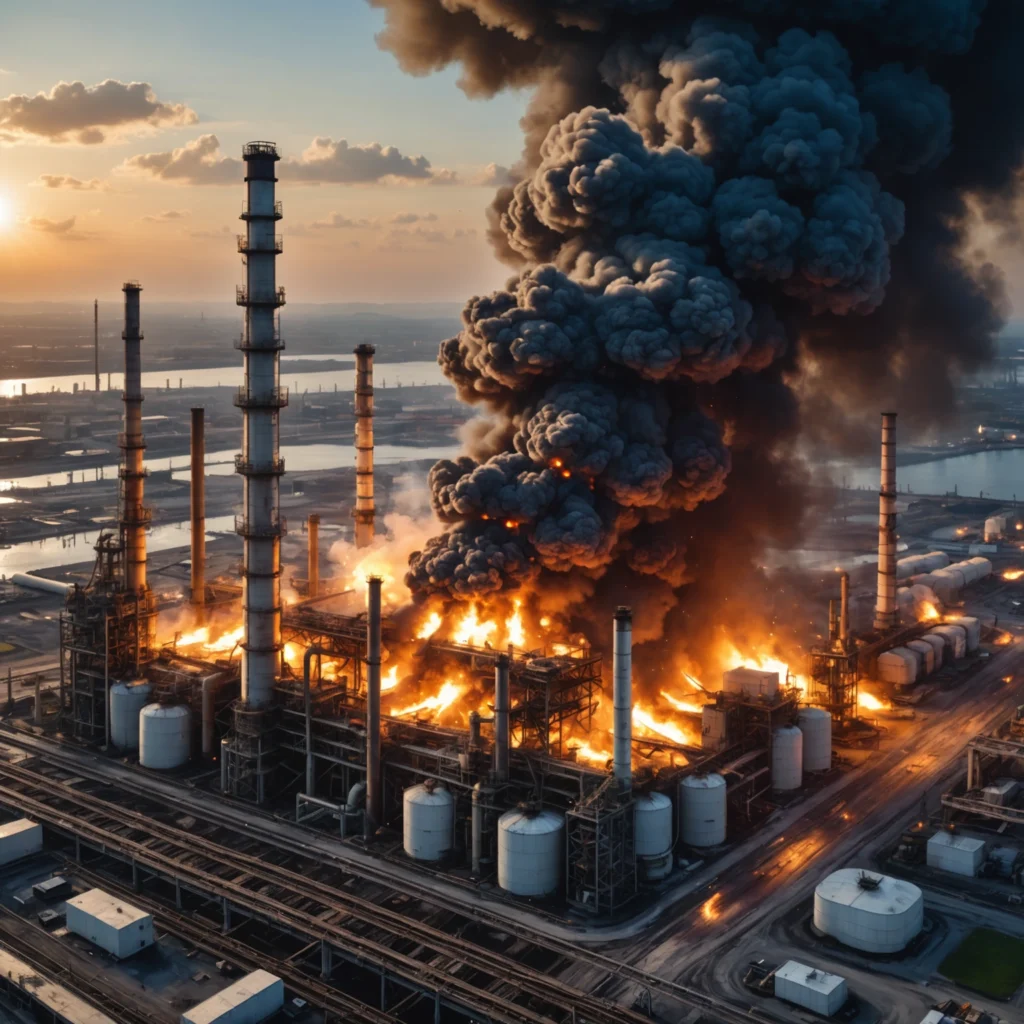
On November 13, 2024, the quiet hum of operations at the Indian Oil Corporation’s (IOC) Mathura refinery was violently interrupted by a catastrophic explosion. The blast, which occurred at a benzene storage tank, sent shockwaves through the facility and the surrounding community, igniting a fire that would require immediate and intense firefighting efforts. As the smoke billowed into the sky, the implications of this disaster began to unfold, raising concerns about safety practices and regulatory oversight in one of India’s critical energy sectors.
Details of the Explosion: What Happened?
According to initial reports, the explosion was triggered during routine operations at the benzene storage tank, a highly volatile area of the refinery. Eyewitnesses described a deafening roar that echoed through the facility, followed by flames that shot into the air, engulfing the area in a dangerous blaze. Emergency responders were quick to arrive on the scene, fighting to bring the situation under control. Fortunately, the fire was contained, but not before it caused significant damage to some adjoining buildings.
Injuries and Casualties: The Human Cost
The human toll of the Mathura refinery blast is severe. Eight individuals suffered serious injuries, prompting an immediate response from medical teams who rushed them to nearby hospitals. As the dust settled, the refinery’s management expressed deep concern for the affected personnel, promising to provide all necessary support for their recovery. The gravity of the situation has sparked outrage among employees and the local community, many of whom are now questioning the safety protocols in place at the refinery.
Investigation Underway: Who is to Blame?
In the wake of the explosion, authorities have launched an investigation to ascertain the cause of the blast and to determine whether negligence played a role. The operator of the firecracker unit, identified as Nasir, is currently under police scrutiny, with investigators verifying the legitimacy of his operational license. This crucial aspect of the investigation raises further questions about regulatory compliance and whether proper safety measures were adhered to.
Official Response: Emergency Measures Activated
The swift response from firefighting teams and emergency responders was commendable, as they worked tirelessly to contain the fire and prevent further damage. Local officials have acknowledged the bravery and professionalism displayed by these teams, emphasizing the need for rigorous safety inspections across all facilities. “We are committed to uncovering the truth behind this incident,” a spokesperson for the IOC stated, highlighting the refinery’s intention to cooperate fully with the investigation.
Public Outcry: Calls for Accountability
The Mathura refinery blast has ignited a firestorm of public sentiment, with many residents and workers demanding accountability and transparency. Social media platforms are buzzing with discussions about the lack of safety measures in place, and various community organizations are rallying to push for stricter regulations on hazardous materials handling. The incident has brought to light the broader issue of industrial safety in India, prompting calls for reform that could prevent future tragedies.
Potential Implications: A Wake-Up Call for the Industry
This tragic event serves as a stark reminder of the inherent dangers associated with industrial operations, particularly in sectors dealing with volatile substances like benzene. As authorities delve deeper into the investigation, industry experts warn that the fallout from the Mathura refinery blast could lead to significant changes in regulatory policies and operational standards across the country.
Moreover, as public scrutiny intensifies, the IOC may face increased pressure to enhance safety measures and ensure that all operational protocols are followed to the letter. “This incident could be a pivotal moment for the industry,” remarked a safety consultant. “It highlights the urgent need for comprehensive training and strict adherence to safety protocols.”
The Road Ahead: Recovery and Reforms
As the injured personnel begin their recovery, the focus will inevitably shift to how the IOC and other stakeholders will respond to this crisis. Will they take the necessary steps to ensure that such an incident never happens again? Or will the Mathura refinery blast become just another statistic in a long line of industrial accidents? The answers to these questions will shape the future of industrial safety in India.
A Community in Shock: How Residents are Coping
In the aftermath of the explosion, the local community has found itself grappling with fear and uncertainty. Many residents live in close proximity to the refinery, and the blast has left them questioning their safety. Community meetings are being held to discuss the incident, with residents voicing their concerns and demanding reassurance from the refinery’s management.
“We need to feel safe in our homes,” one concerned resident stated during a community forum. “This is not just about the refinery; it’s about our lives and our families.” The voices of the community are growing louder, as they seek to ensure that their safety is prioritized in the wake of this disaster.
Conclusion: A Call for Change
The Mathura refinery blast is more than just an unfortunate accident; it is a clarion call for change within the industrial sector. As investigations continue and the community seeks answers, it is vital that lessons are learned to prevent future tragedies. The resilience of the injured, the bravery of the responders, and the collective voice of the community will be instrumental in driving the necessary reforms.
As we move forward, one thing is clear: the safety of workers and residents must be the top priority for all industrial operations. The Mathura refinery blast must serve as a lesson that echoes throughout the industry, reminding everyone that safety cannot be an afterthought—it must be a fundamental principle.



