
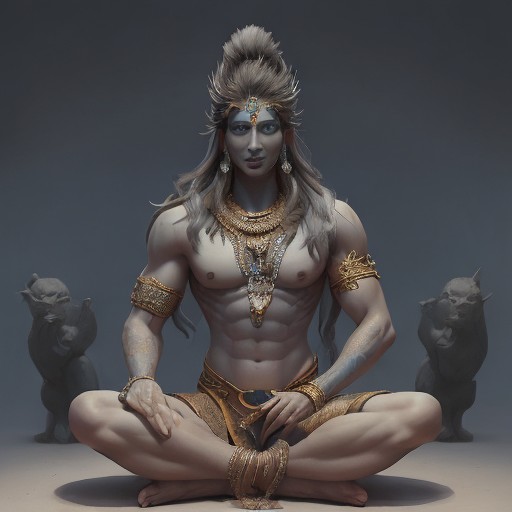
The Divine Dance of Shiva: A Cosmic Force in Hinduism
Shiva, one of the principal deities in Hinduism, represents a profound and complex aspect of divinity that has captivated millions across the globe. Revered as the Destroyer among the Holy Trinity (Trimurti) alongside Brahma the Creator and Vishnu the Preserver, Shiva’s multifaceted persona embodies the dualities of creation and destruction. His divine dance, known as Nataraja, symbolizes the endless cycle of birth, life, and death—an eternal rhythm that resonates through the cosmos.
Understanding Shiva: The God of Transformation
Shiva’s unique characteristics include his ascetic lifestyle and his role as a family man; he is often depicted with his consort Parvati and their children, Ganesha and Kartikeya. This balance between extreme renunciation and domesticity highlights the complexities of human existence, making Shiva relatable to many. His third eye, which represents wisdom and insight, signifies his ability to see beyond the superficial and perceive the truth of existence.
Shiva in Contemporary Culture: A Symbol of Spirituality
In recent years, the name “Shiva” has transcended religious boundaries, evolving into a symbol of spirituality and self-discovery. Influential figures such as Sadhguru Jaggi Vasudev, the founder of the Isha Foundation, have popularized the teachings of Shiva, emphasizing the importance of inner transformation and consciousness. Sadhguru’s initiatives, like the Rally for Rivers project, aim to raise awareness about water conservation in India, indirectly echoing Shiva’s role as a protector of nature.
The Festivals of Shiva: Celebrating Devotion
Hindu festivals dedicated to Lord Shiva, such as Maha Shivaratri, draw millions of devotees who celebrate through fasting, meditation, and night-long vigils. This sacred night is not just a ritual; it signifies the overcoming of darkness and ignorance in life. The stories surrounding Shiva’s festivals, like the tale of Utpanna Ekadashi, where the gods seek refuge with Shiva after defeat, further illustrate his protective and transformative qualities.
Shiva and the Modern Economy: The Name in Business
Interestingly, the name “Shiva” extends beyond the religious and spiritual domains. In the world of business, companies like Shiva Mills Ltd. and Shiva Texyarn Ltd. have emerged, trading actively on the Indian stock market. Their share prices fluctuate with market trends, adding a layer of complexity to the interpretation of ‘Shiva’ in contemporary society. Investors often find themselves drawn to these companies, perhaps subconsciously influenced by the auspiciousness associated with the name.
The Philosophical Significance of Shiva: A Deeper Examination
Philosophically, Shiva represents the ultimate reality, the essence of consciousness. His teachings, whether ancient or modern, encourage a journey inward to discover one’s true self. The Advaita Vedanta philosophy, which espouses non-dualism, often relates to Shiva’s teachings, highlighting the interconnectedness of all beings. This philosophical stance has sparked debates among scholars and spiritual seekers alike, inviting them to examine the implications of such beliefs in today’s fragmented world.
Controversies and Discussions: The Changing Face of Shiva
As with any prominent figure, Shiva’s representation has seen controversies. Some modern interpretations challenge traditional views, sparking discussions on the relevance of ancient symbols in contemporary society. The commercialization of Shiva’s image, especially through mass-produced idols and merchandise, raises questions about authenticity and devotion. Are we distorting the essence of Shiva for the sake of consumerism?
Shiva as a Catalyst for Change: The Path Forward
In the face of modern challenges, the teachings of Shiva resonate with those advocating for social and environmental justice. Movements inspired by his principles emphasize harmony with nature and the importance of sustainable living. As global issues like climate change and social inequality intensify, the ancient wisdom surrounding Shiva serves as a guiding light, urging humanity to reconnect with its roots.
The Global Reach of Shiva: A Universal Icon
Shiva’s influence is not confined to India and its neighboring countries; he has become a universal icon of peace and transformation. In regions like Indonesia, particularly in Bali and Java, Shiva is revered in various forms, showcasing the adaptability of Hindu beliefs across cultures. As global interactions increase, the essence of Shiva continues to inspire artists, musicians, and spiritual seekers worldwide, demonstrating the timeless nature of his teachings.
Conclusion: The Everlasting Legacy of Shiva
Shiva’s legacy is one of transformation, resilience, and spiritual awakening. Whether viewed as a deity, a symbol of festivals, a name in business, or a philosophical icon, the essence of Shiva remains deeply relevant in today’s world. As society grapples with complex challenges, the teachings of Shiva invite us to explore the depths of our consciousness and embrace the cycles of existence. In celebrating Shiva, we honor not just a deity but the universal truths that bind us all.
So, what does Shiva mean to you in this age of rapid change? As we reflect on his teachings, let us engage in a dialogue about the implications of his legacy in our lives and the world around us.


