
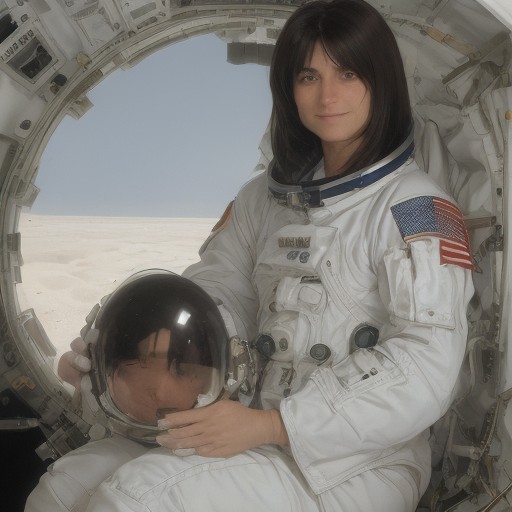
Sunita Williams: A Stellar Journey Through Space and Unforeseen Challenges
Astronaut Sunita Williams has recently captured headlines with her remarkable yet tumultuous journey aboard the International Space Station (ISS). As she marks her prolonged stay in the cosmos, her health complications and the intricacies of her mission extension have made waves in both scientific and popular circles. With her career spanning over two decades, Williams is not only an emblem of human exploration but also a symbol of resilience in the face of adversity.
Health Challenges After Six Months in Space
On November 25, 2024, the space community held its breath as reports surfaced regarding Williams’ deteriorating health condition after spending six months in the ISS. Alongside fellow astronaut Barry Wilmore, Williams faced complications that led to an emergency medical procedure upon their return to Earth. The details, however, remained shrouded in medical privacy, raising questions about the long-term health impacts of extended space missions.
This alarming news has sparked discussions among scientists and space enthusiasts alike about the potential ramifications of extended stays in microgravity environments. Critics argue that the health risks associated with prolonged space travel must be addressed more seriously, particularly as we look towards more ambitious missions to Mars and beyond.
The Marvel of Sunrises and Sunsets in Space
Despite the health concerns, Williams’ time in space has been filled with breathtaking views and experiences that few will ever witness. Orbiting the Earth at a staggering speed of approximately 28,000 km/h, the ISS completes a full orbit every 90 minutes. This means that Williams and her crewmates experience an astonishing 16 sunrises and sunsets each day.
“It’s surreal,” Williams shared in an interview. “To see the Earth bathed in golden sunlight, only to watch it plunge into darkness moments later, is a reminder of the beauty and fragility of our planet.” Her poetic reflections on these daily celestial spectacles serve as a reminder of the profound experiences astronauts undergo that transcend mere scientific exploration.
Participating in Democracy from Space
In an inspiring twist, despite her lofty position, Williams has been actively participating in the democratic process back on Earth. NASA has implemented a robust system allowing astronauts to vote during U.S. elections, ensuring that even when orbiting at 400 kilometers above the Earth, their voices are heard. This initiative highlights the agency’s commitment to maintaining a connection between astronauts and their home country, even amidst the challenges of space travel.
Williams’ participation in the electoral process underscores the notion that while she may be physically distant, her ties to Earth remain strong. This raises intriguing questions about the implications of civic engagement in space and how future missions might adapt to ensure that astronauts can exercise their rights as citizens.
Mission Extension: A Necessary Complication
The complications surrounding Williams’ health were further exacerbated by the unexpected extension of her mission. Initially planned for a shorter duration, the mission was prolonged due to issues with Boeing’s Starliner crew capsule and the unfavorable weather conditions that included Hurricane Milton. These unforeseen circumstances have reignited debates about the reliability of current space transportation systems and the necessity of contingency plans in human spaceflight.
As critics examine the challenges posed by delays and technical difficulties, it becomes increasingly clear that the future of space exploration hinges on the robustness of our technology and the health and safety of astronauts like Williams. Will NASA and private companies be able to adapt swiftly enough to ensure the well-being of their crews? This remains a pressing concern.
The Road to Medical Readjustment
Upon returning to Earth, astronauts often face a rigorous process of medical readjustment. Williams and her colleagues were immediately taken to a hospital in Pensacola, Florida for evaluation after their nearly eight-month stay on the ISS. The process of readjusting to Earth’s gravity can take days or even weeks, posing significant challenges for astronauts’ physical health and psychological well-being.
Some experts have expressed concern over the long-term effects of microgravity on the human body, noting potential issues such as muscle atrophy, bone density loss, and cardiovascular complications. Williams’ recent health struggles add a layer of urgency to this ongoing discourse, emphasizing the need for comprehensive research into the consequences of extended space missions.
Sunita Williams: A Symbol of Resilience and Inspiration
Throughout her career, Sunita Williams has exemplified resilience, courage, and a pioneering spirit. As she navigates through these recent challenges, her story serves as a beacon of hope for aspiring astronauts and the broader public. Her extensive experience in spaceflight is not just a testament to human ingenuity, but also a reminder of the personal sacrifices and risks that come with exploring the final frontier.
Williams has inspired countless individuals, particularly women in science and technology, to pursue careers in fields traditionally dominated by men. Her achievements pave the way for future generations of astronauts, scientists, and engineers, demonstrating that determination and passion can transcend barriers.
The Future of Space Exploration
The implications of Williams’ recent experiences extend beyond her personal health. The challenges she faces reflect broader questions about the future of space exploration. As humanity sets its sights on Mars and beyond, the health and safety of astronauts must be prioritized. This includes not only physical health but also mental well-being, as isolation and confinement in space can pose significant psychological challenges.
Moreover, as discussions about colonizing other planets gain momentum, the need for robust healthcare systems in space becomes more pressing. How will we manage health crises in environments far removed from Earth? What protocols can be established to ensure astronauts’ well-being during extended missions? These questions will shape the future of human spaceflight.
Conclusion: The Journey Continues
As we watch Sunita Williams navigate her way through these complex challenges, we are reminded of the spirit of exploration that drives humanity forward. Her experiences raise essential questions about our readiness for deeper space missions and the health implications of such ventures. With each sunrise and sunset she witnesses from the ISS, Williams continues to push the boundaries of human exploration, inspiring us all to look up and dream of what lies beyond our planet.
The journey of Sunita Williams is far from over. As she continues to advocate for health awareness in space and inspire future generations, we remain eager to see what new adventures await her in the cosmos.


