
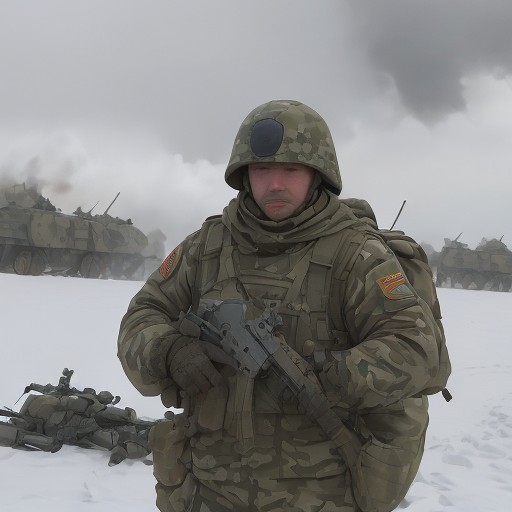
Introduction: A War That Shook the World
The Russian-Ukrainian War, a conflict that ignited in 2014 and escalated dramatically in 2022, continues to unfold with devastating consequences. With its roots deeply embedded in historical grievances and geopolitical tensions, this war has not only claimed countless lives but has also reshaped international alliances and global politics. As we delve into the various facets of this ongoing conflict, we must confront the stark realities of human suffering, the intricacies of international involvement, and the potential futures that lie ahead.
Historical Context: The Spark That Ignited a Fire
To fully understand the current landscape of the Russian-Ukrainian War, we must first journey back to 2014, a pivotal year that saw the annexation of Crimea by Russia. This act, which was met with widespread condemnation from the international community, marked the beginning of a prolonged and bloody conflict. The annexation resulted in six deaths, including three protesters, two Ukrainian soldiers, and one Russian Cossack paramilitary, setting a grim tone for the years to come.
Following Crimea’s annexation, the War in Donbas erupted between 2014 and 2022, claiming an estimated 14,200 to 14,400 lives, both military and civilian. This period laid the groundwork for the full-scale invasion that commenced in 2022, a conflict that has since spiraled into one of the deadliest and most complex wars in recent history.
The Full-Scale Invasion: A Humanitarian Catastrophe
As the world watched in horror, Russia launched a full-scale invasion of Ukraine in early 2022. This act of aggression has resulted in staggering human losses, with estimates suggesting up to 1,000,000 casualties, although the exact figures remain shrouded in uncertainty due to discrepancies in reporting.
By mid-September 2024, Russia’s Ministry of Defence confirmed that 5,937 Russian soldiers had been killed in the conflict. Meanwhile, Ukraine reported over 700,000 individuals killed and wounded by the end of July 2024. These numbers, while alarming, are likely to be underreported as the Office of the United Nations High Commissioner for Human Rights (OHCHR) indicates that civilian casualties are likely much higher than officially recognized.
Current Situation: A Stalemate with High Stakes
As of now, the conflict remains ongoing, with both sides entangled in a brutal stalemate. Ukrainian forces have displayed remarkable resilience, adapting to Russian military tactics while striving to reclaim lost territories. Yet, the human cost continues to mount, with both military and civilian populations bearing the brunt of the violence.
Recent reports suggest that the conflict could be heading into a new phase, as international dynamics shift. The involvement of nations such as the United States has added another layer of complexity to the situation. The U.S. has authorized Ukrainian forces to utilize ATACMS (Army Tactical Missile System), enabling limited strikes against Russian and North Korean military targets in Kursk Oblast. This move, while strategic, raises questions about the potential for escalation and the possibility of a broader conflict.
International Involvement: Allies and Adversaries
The global ramifications of the Russian-Ukrainian War extend beyond the battlefield. North Korea’s reported involvement, sending troops to assist Russia, could transform this regional conflict into a more complex international crisis. The implications of such alliances are profound and could lead to unforeseen consequences, potentially dragging other nations into a conflict that many hope to avoid.
Meanwhile, the United States continues to play a pivotal role, providing military support to Ukraine and reinforcing its commitment to countering Russian aggression. This support has not gone unnoticed, with Russia viewing U.S. involvement as a direct threat to its interests, further complicating the geopolitical landscape.
Economic Implications: A War on Multiple Fronts
Beyond the immediate human toll, the Russian-Ukrainian War has unleashed a wave of economic challenges for both nations and the world at large. Russia faces significant economic hurdles due to sanctions imposed by Western nations, which have crippled its economy. Low birth rates and demographic issues exacerbate these challenges, prompting the Kremlin to implement policies aimed at combating inflation and stabilizing the economy.
For Ukraine, the economic fallout is equally dire. The war has devastated infrastructure, disrupted trade, and strained resources. As the conflict drags on, the need for international aid has never been more pressing. The global community watches closely, recognizing that the economic stability of Ukraine is critical not only for the nation itself but also for regional stability in Eastern Europe.
Future Prospects: A Path to Peace?
Amidst the chaos, questions linger about the future of the Russian-Ukrainian conflict. There are whispers of potential peace negotiations, with the Kremlin attempting to dictate terms. However, these efforts are hampered by ongoing military strategies and the adversarial stance both sides have adopted.
For peace to be achieved, both parties must find common ground, a task that seems increasingly daunting as the conflict rages on. The international community’s role in facilitating dialogue will be crucial, but skepticism abounds regarding Russia’s willingness to engage in genuine negotiations rather than merely seeking to consolidate its gains.
Conclusion: The War’s Endgame and Its Global Impact
The Russian-Ukrainian War is a multifaceted conflict that defies easy categorization. It serves as a stark reminder of the complexities of international relations, the fragility of peace, and the profound impact of war on human lives. As the situation evolves, the world must remain vigilant, recognizing that the consequences of this war extend far beyond the borders of Ukraine and Russia.
In closing, as we reflect on the ongoing crisis, it is imperative to consider the potential implications for global stability, economic health, and humanitarian efforts. The stakes are high, and the world watches with bated breath, hoping for a resolution that can bring an end to the suffering and pave the way for a brighter future.


