
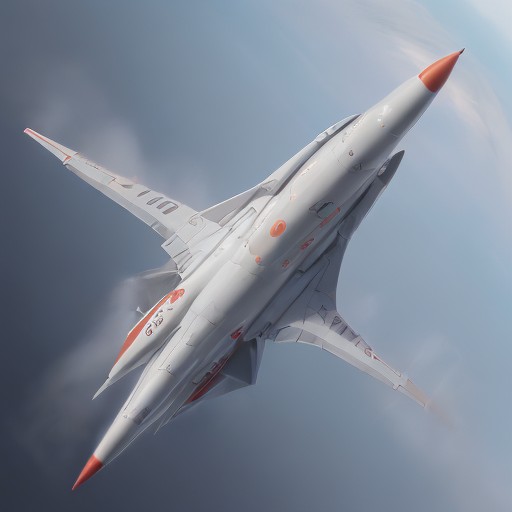
Introduction: The Dawn of Hypersonic Warfare
In the rapidly evolving landscape of modern military technology, few advancements have captured the world’s attention like hypersonic missiles. These advanced weapons, capable of soaring at speeds greater than Mach 5, represent a seismic shift in global defense strategies. With their unparalleled speed and unpredictable trajectories, hypersonic missiles could revolutionize warfare as we know it, creating a new kind of arms race among the world’s superpowers.
What Makes Hypersonic Missiles So Revolutionary?
Hypersonic missiles are not just faster versions of traditional missiles; they are equipped with capabilities that make them exceptionally challenging to detect and intercept. Unlike ballistic missiles that follow predictable parabolic arcs, hypersonic glide vehicles (HGVs) can maneuver during flight, making them difficult for current missile defense systems to track and destroy. This unpredictability raises serious concerns about global security and the balance of power.
Russia: Leading the Charge in Hypersonic Technology
Russia has emerged as a frontrunner in hypersonic missile development, unveiling a series of advanced systems that have sent shockwaves through military circles. The Avangard hypersonic glide vehicle is perhaps the crown jewel of Russia’s arsenal, boasting speeds of up to Mach 27 and designed to evade missile defenses with its unpredictable trajectory. Furthermore, the Kinzhal missile, which was deployed from MiG-31K fighter jets, has already been tested in combat during the ongoing conflict in Ukraine. The Zircon cruise missile, capable of being launched from ships, adds further depth to Russia’s hypersonic capabilities, targeting both naval and land-based assets.
China: Accelerating Hypersonic Ambitions
Not to be outdone, China is rapidly advancing its hypersonic missile technology. The DF-27 missile, with a reported striking range of up to 8,000 kilometers, poses a significant threat to U.S. bases and interests in the Indo-Pacific region. Additionally, the DF-ZF hypersonic glide vehicle, mounted on the DF-17 medium-range ballistic missile, exemplifies China’s commitment to enhancing its military capabilities. These developments indicate that China is not only keeping pace with Russia but may also be pushing the boundaries of hypersonic technology even further.
The United States: A Response to the Emerging Threat
Faced with the rising tide of hypersonic threats, the United States is mounting a robust response. The U.S. Department of Defense is heavily investing in directed energy weapons, such as high-powered lasers, aimed at neutralizing hypersonic missiles during their glide phase. By the late 2020s, we could see these systems integrated into existing military frameworks, potentially leveling the playing field. Moreover, enhancements to Integrated Air and Missile Defense (IAMD) systems, including adaptations of the Aegis Ballistic Missile Defense platform, are also underway, as the U.S. strives to maintain its military superiority.
India’s Foray into Hypersonic Technology
India has also made significant strides in hypersonic missile technology, successfully testing its first long-range hypersonic mission. The DRDO hypersonic missile test marks a pivotal moment for India’s defense capabilities, granting the nation an edge in delivering payloads at unprecedented speeds. With regional tensions simmering, especially concerning neighboring countries, India’s advancements in hypersonic technology could serve as a deterrent against potential adversaries.
North Korea: A Controversial Player in the Arms Race
In the shadows of major powers, North Korea is also making headlines with its hypersonic missile tests. Aiming to bolster its nuclear and missile capabilities, North Korea has recently tested new intermediate-range hypersonic missiles. These provocations have drawn criticism from neighboring countries and the United States, as the rogue state continues to defy international norms. The implications of North Korea’s hypersonic advancements not only destabilize the region but also complicate global security dynamics.
Russia’s Continued Prowess: Testing Hypersonic Weapons in Combat
Russian President Vladimir Putin has reaffirmed the country’s commitment to hypersonic technology, announcing plans to continue testing the hypersonic Oreshnik ballistic missile even under combat conditions. Following a successful test in Ukraine, Putin has ordered the serial production of this formidable weapon, signaling that Russia intends to maintain its lead in hypersonic capabilities. These developments raise alarming questions about the potential for hypersonic weapons to be used in active conflict scenarios.
The Global Implications: An Arms Race Like No Other
The rapid development and deployment of hypersonic missiles by multiple nations indicate a high-stakes arms race that could redefine global security dynamics. As countries invest heavily in hypersonic technologies, the potential for miscalculation or escalation increases. The unpredictable nature of hypersonic missiles could lead to a new paradigm of warfare where traditional defense systems become obsolete, forcing nations to rethink their military strategies.
Conclusion: The Future of Warfare in a Hypersonic Age
As we stand on the brink of a new era of warfare, the implications of hypersonic missile technology are far-reaching. Nations around the world are racing to develop and deploy these advanced weapons, which could fundamentally alter the balance of power. The potential for hypersonic missiles to evade detection and intercept systems introduces a chilling uncertainty into global security, prompting military leaders and policymakers to grapple with the consequences of this technological leap.
The rise of hypersonic missiles is not just a military issue; it is a global challenge that demands attention and dialogue. As readers, it is essential to engage with the implications of these advancements, considering not only the technological marvels but also the ethical and strategic dilemmas they present. The question remains: in a world where speed is king, how will nations navigate the treacherous waters of hypersonic warfare?


