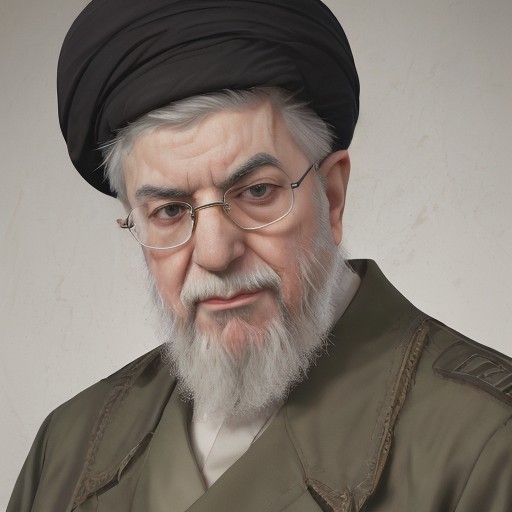
The Shadow of Doubt: Rumors Surrounding Khamenei’s Health
In recent weeks, the digital landscape has been rife with speculation and concern regarding the health of Iran’s Supreme Leader, Ayatollah Ali Khamenei. Unverified reports circulated on social media, alleging that Khamenei was in a coma or, even more shockingly, had passed away. Such claims ignited a firestorm of discussions, with many questioning the stability of Iran’s leadership amidst ongoing geopolitical tensions.
However, the tide of speculation was met with a counter-narrative when Khamenei’s office released a photograph on November 17, 2024. The image depicted him in his office, engaging with Iran’s Ambassador to Lebanon, Mojtaba Amani, who had recently been injured in Beirut during Israel’s aggressive strikes against the Hezbollah terror group. This public appearance was a strategic move to dispel rumors and reassess his authority as the nation’s figurehead.
Khamenei’s Call for Muslim Unity
As the world watches closely, Khamenei has taken a bold stand, emphasizing the necessity for Muslim unity in the face of external pressures. His recent statements resonate with a call to action, urging the Islamic community to come together against perceived threats from adversaries, particularly the United States and Israel.
In a notable post on X, formerly known as Twitter, Khamenei proclaimed that these nations would face a “crushing response” for their actions against Iran and the Resistance Front, a coalition of various militant groups in the region. This declaration serves not only as a rallying cry for his supporters but also as a warning to his adversaries that Iran remains resolute in defending its interests.
The Legacy of Hassan Nasrallah
Another layer to Khamenei’s recent rhetoric involves honoring slain Hezbollah leader Hassan Nasrallah. By paying tribute to Nasrallah, Khamenei seeks to consolidate his position among Iranian and Lebanese Shiite groups, reinforcing the idea that Hezbollah stands as a bulwark against Israeli aggression. Khamenei’s admiration for Nasrallah is emblematic of his broader strategy to promote unity among Shiite factions across the Middle East.
In this context, Khamenei’s statements can be seen as part of a larger narrative that paints Iran as a defender of the oppressed and a champion of the Resistance Front. His intent is clear: to galvanize support not just within Iran but across the Muslim world, positioning the Iranian regime as a leader in the fight against Western imperialism and Zionism.
The Implications of Khamenei’s Stance
The recent developments surrounding Khamenei’s health and his subsequent statements have significant implications for both Iranian domestic politics and international relations. In a nation where leadership is often synonymous with the stability of the regime, the rumors of Khamenei’s declining health raised questions about succession and governmental continuity.
Should Khamenei’s health issues escalate, the potential for internal power struggles could destabilize Iran. This scenario could embolden hardliners who may push for a more aggressive foreign policy, particularly against Israel and the United States. Conversely, a more moderate faction might emerge, advocating for reform and engagement with the West, potentially altering the geopolitical landscape of the Middle East.
Reactions from the International Community
The international community has been quick to respond to Khamenei’s recent proclamations. Analysts in Washington and Tel Aviv are closely monitoring his statements, interpreting them as signals of Iran’s willingness to escalate its involvement in regional conflicts. The U.S. government has reiterated its commitment to countering Iranian influence in the region, particularly through support for Israel and Arab allies.
Some experts suggest that Khamenei’s assertive rhetoric could be a strategic maneuver to distract from domestic issues, such as economic challenges and public discontent. By projecting strength against external foes, Khamenei may aim to unify the populace and divert attention from internal grievances.
The Role of Social Media in Shaping Perceptions
Social media has played a pivotal role in amplifying the discourse surrounding Khamenei and the Iranian regime. The rapid spread of rumors regarding his health exemplifies how digital platforms can influence public perception and political narratives. The Iranian government has faced challenges in controlling the narrative within its borders, as citizens increasingly turn to social media for information, often bypassing state-controlled media channels.
This shift poses a significant challenge for Khamenei and his administration. As misinformation spreads, maintaining authority and credibility becomes increasingly difficult. The release of the photograph showing Khamenei with Ambassador Amani was a calculated effort to counteract this trend and reaffirm his leadership in a time of uncertainty.
The Future of Iran Under Khamenei’s Vision
As Khamenei continues to navigate a complex geopolitical landscape, his vision for Iran remains ambitious. He envisions a nation that stands firm against perceived imperialist threats, promoting a narrative of resistance and unity among Muslims worldwide. However, how effectively he can implement this vision amid health concerns and rising domestic issues is yet to be seen.
As Iran approaches critical junctures in its political landscape, the dynamics of Khamenei’s leadership will remain a focal point for observers. Will he successfully rally the Iranian people and the broader Muslim community, or will internal fractures undermine his authority? Only time will tell, but one thing is clear: the world is watching.
Conclusion: The Unyielding Leader?
As rumors swirl and tensions rise, Ayatollah Ali Khamenei remains a figure cloaked in both mystery and authority. His recent public appearances and assertive statements suggest a leader who is not ready to back down in the face of adversity. Whether he can maintain this stance amidst the challenges ahead will be critical for Iran and its role on the global stage.
For now, the discussions surrounding Khamenei’s health and his fiery rhetoric continue to captivate audiences both in Iran and abroad. As the situation unfolds, one can only speculate on the implications of his leadership for the future of Iran and its place in a tumultuous world.


