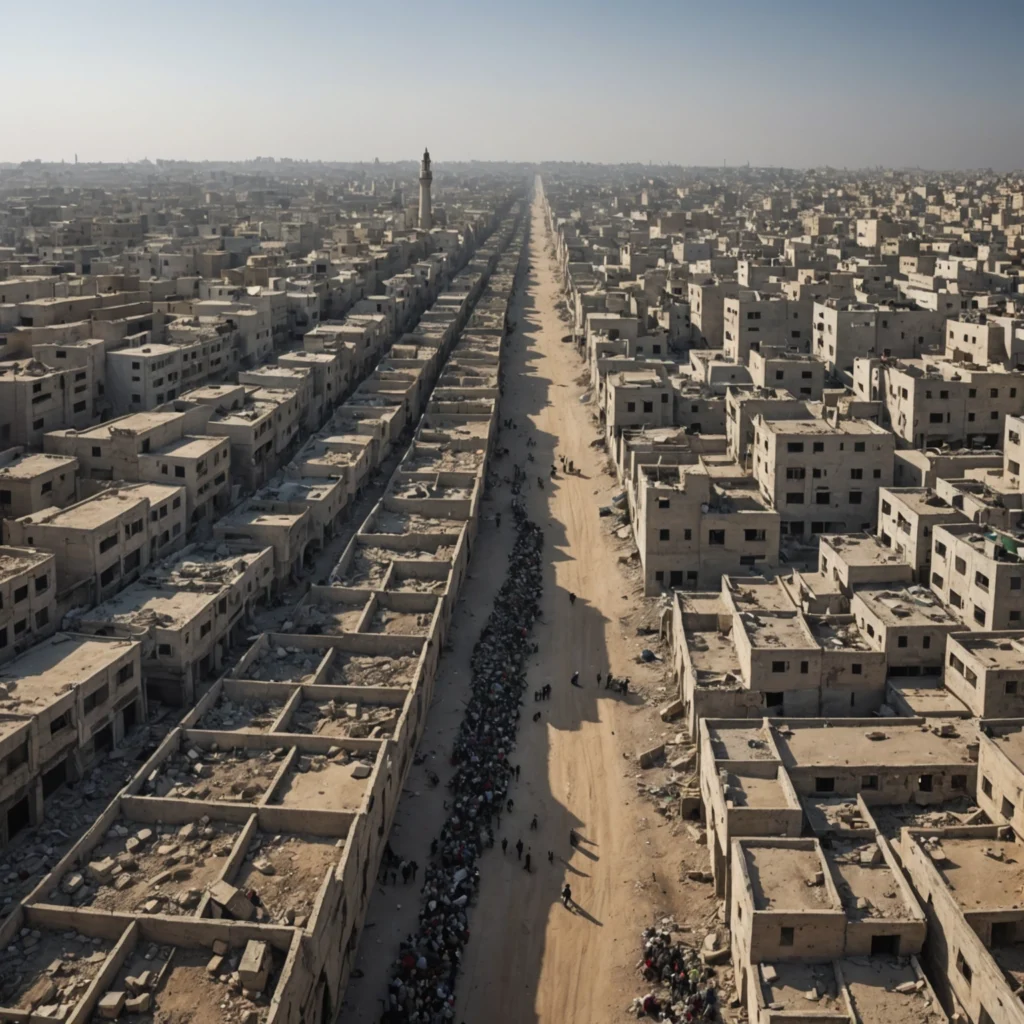
Background of the Gaza Strip Conflict
The Gaza Strip, a narrow stretch of land along the Mediterranean coast, has been a focal point of conflict for decades. Governed by Hamas since 2007, the region has faced severe restrictions due to an Israeli blockade, which was imposed in response to security concerns. This blockade has had a devastating impact on the local economy, with a staggering 81% of the population living below the poverty line and 63% suffering from food insecurity, as reported by the United Nations Relief and Works Agency (UNRWA).
The Gaza Strip’s complex history of territorial disputes, political strife, and military engagements has led to a humanitarian crisis that continues to escalate. The latest wave of violence erupted on October 7, 2023, when hostilities between Israel and Hamas reached a breaking point, igniting a conflict with profound implications for the region.
The Recent Escalation: Operation Swords of Iron
On the fateful day of October 7, Israel initiated Operation Swords of Iron, a military campaign aimed at dismantling Hamas’ military and governmental capabilities. Prime Minister Benjamin Netanyahu unequivocally declared that Israel was at war, marking a significant escalation in hostilities that had been brewing for years.
As tensions soared, Hamas made a notable offer on October 9, proposing to release all civilian hostages in exchange for a cessation of Israeli military operations. However, this overture was met with a swift rejection from Israeli authorities, highlighting the unwillingness of both sides to compromise amidst the chaos.
The Humanitarian Crisis Deepens
The conflict has triggered a profound humanitarian crisis within the Gaza Strip, drawing international attention and concern. The Israeli Defense Forces (IDF) declared a state of emergency, mobilizing tens of thousands of army reservists to support the military operations. Initially, a total blockade was announced, restricting the flow of essential supplies into Gaza. However, mounting international pressure led to a modification of this blockade, allowing aid convoys to enter the area starting October 21, 2023.
Despite the arrival of humanitarian aid, conditions in Gaza remain dire. Reports indicate that on November 14, 2024, food was stolen from a convoy consisting of 20 trucks, and gunfire erupted during the delivery, injuring three drivers. Such incidents underscore the chaotic nature of the situation, where even efforts to provide relief are met with hostility.
Civilian Impact: A Tragic Toll
The toll on civilians has been catastrophic, as the conflict continues to claim innocent lives. On November 14, 2024, an airstrike carried out by Israeli forces in northern Gaza resulted in the deaths of at least 14 Palestinians, including two young sisters. Such tragic incidents evoke outrage and highlight the urgent need for a reassessment of military strategies and the protection of non-combatants.
On October 13, 2023, the IDF issued a controversial directive, calling for the evacuation of all civilians from Gaza City to areas south of Wadi Gaza within a mere 24 hours. This order drew widespread criticism from human rights organizations, which labeled it as “outrageous” and “impossible,” given the already precarious living conditions and the limited options for safe passage amidst ongoing hostilities.
The Role of the International Community
The global community has been vocal in its condemnation of the escalating violence and the humanitarian crisis in Gaza. Calls for intervention have intensified, with many nations urging both sides to cease hostilities and prioritize the protection of civilians.
Humanitarian organizations are sounding the alarm over the deteriorating conditions in Gaza, emphasizing the urgent need for comprehensive aid and support for those affected by the conflict. With over two million people residing in the Gaza Strip, the situation is reminiscent of a ticking time bomb, where further escalation could lead to an unmanageable humanitarian disaster.
Potential Implications and Reactions
The ongoing conflict raises critical questions about the future of the Gaza Strip and its people. As international tensions rise, observers speculate on the potential implications for regional stability. The humanitarian crisis, coupled with the violent confrontations, could spark a broader conflict that transcends the borders of Gaza and Israel.
Reactions from the global community have been mixed. Some nations have rallied behind Israel’s right to defend itself, while others have condemned the military actions as disproportionate and harmful to civilians. The divide in opinions underscores the complexity of the situation and the challenges of achieving a peaceful resolution.
Calls for Humanitarian Intervention
As the situation in the Gaza Strip continues to unfold, a chorus of voices is calling for immediate humanitarian intervention. The dire conditions faced by civilians—exacerbated by the blockade and ongoing military operations—necessitate a coordinated response from the international community.
Advocates for humanitarian aid emphasize the importance of ensuring that assistance reaches those in need, regardless of political affiliations or military objectives. With the ongoing conflict showing no signs of abating, the urgency for intervention becomes ever more pressing.
The Future of Gaza
The future of the Gaza Strip hangs in the balance, as the conflict between Israel and Hamas persists. With both sides entrenched in their positions, the path to peace appears fraught with challenges. The humanitarian crisis, marked by suffering and loss, demands immediate attention and action from global leaders.
As the world watches, the question remains: can diplomacy prevail in a landscape marred by violence, or will the Gaza Strip continue to be a battleground for conflict? The answers will shape the region’s future and the lives of millions caught in the crossfire.
Conclusion: A Call for Compassion and Action
In conclusion, the crisis in the Gaza Strip serves as a stark reminder of the human cost of conflict. As civilians bear the brunt of the violence, it is imperative for the international community to respond with compassion and action. The need for dialogue, understanding, and cooperation has never been more urgent, as we collectively strive for a lasting peace that prioritizes the dignity and rights of all individuals.
In these trying times, let us not forget the humanity that binds us all, and let us work towards a future where the people of Gaza can live in peace and security.


