
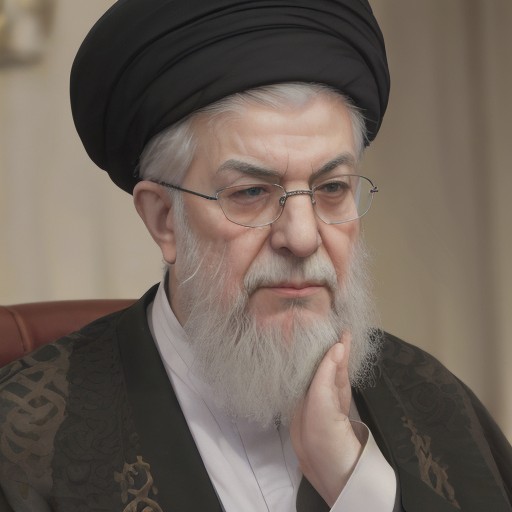
The Enigmatic Leadership of Ayatollah Ali Khamenei
The political landscape of Iran teeters on the brink of uncertainty as speculation surrounding the health and potential succession of Ayatollah Ali Khamenei continues to swirl. The Supreme Leader, who has held the highest position in Iran since 1989, is not just a figurehead; he is a pivotal player in shaping Iran’s domestic and foreign policies. Recent reports have cast a shadow over his leadership, hinting at serious health issues while also igniting debates about who might take the reins should Khamenei step down or become incapacitated.
Health Concerns: Fact or Fiction?
Rumors have circulated that the 84-year-old supreme leader may be in a coma, leading to public outcry and speculation about the future of Iran’s governance. However, Khamenei’s office has refuted these claims by releasing a photograph depicting him meeting with an envoy, suggesting that he remains engaged in political affairs. This denial is a strategic move to quell fears of instability within the Iranian political system, which has already been shaken by protests and discontent in recent years.
Despite the official statements, the uncertainty surrounding Khamenei’s health has raised alarms among political analysts and citizens alike. If these rumors hold any truth, the implications for Iran could be monumental, prompting questions about leadership succession and the potential for civil unrest.
The Succession Dilemma: Who Will Lead Iran Next?
In light of these health concerns, speculation is rampant regarding Khamenei’s succession. Reports have emerged suggesting that he may have secretly chosen his son, Mojtaba Khamenei, as his successor. This revelation has significant implications for Iran’s political dynamics, as it could signify a shift towards a more dynastic form of governance.
While the notion of a successor may provide a semblance of stability, it also raises eyebrows about the legitimacy and acceptance of such a transition. The Iranian populace, particularly the younger generation, is increasingly disillusioned with the ruling elite. Any perceived attempt to install a family member as the next supreme leader could ignite protests and further dissent, potentially destabilizing the already fragile political system.
Khamenei’s Role in International Diplomacy
Beyond internal politics, Khamenei has also been involved in high-stakes international diplomacy. Notably, he was reported to have engaged in discussions with Elon Musk, aimed at easing tensions with the West. This move is particularly intriguing given the backdrop of strained relations during Donald Trump’s presidency, which saw increased sanctions and military threats against Iran.
Such diplomatic overtures illustrate Khamenei’s awareness of Iran’s precarious position on the global stage. While he maintains a hardline stance against perceived adversaries, his willingness to engage with influential figures suggests a desire to navigate the complex web of international relations more tactically.
Threats and Warnings: Khamenei’s Defiant Stance
Posting on social media platform X, Khamenei assured the Iranian people that both the United States and the “Zionist regime” would face a “crushing response” for their actions against Iran and the Resistance Front. Such statements not only bolster his image as a steadfast leader but also resonate with a populace that has long viewed these nations as existential threats.
The Implications of Khamenei’s Leadership and Succession
The future of Iran hangs in the balance as the world watches closely. If Khamenei’s health continues to decline, the question of succession will become increasingly pressing. A smooth transition is essential to avoid chaos, but the potential for unrest looms large, especially if the younger generation feels disenfranchised by a perceived dynastic leadership.
Moreover, the international community remains wary of Iran’s intentions under Khamenei’s leadership. His defiant rhetoric and continued support for militant groups in the region could lead to escalated tensions, making diplomacy all the more crucial.
Public Sentiment: A Turning Tide?
Amidst these developments, public sentiment in Iran is shifting. The younger generation, who make up a significant portion of the population, are increasingly vocal about their desire for reform. The prospect of a successor who may perpetuate the status quo is not appealing to a demographic eager for change and modernization.
If Mojtaba Khamenei is indeed the chosen successor, he may face an uphill battle in winning the hearts and minds of a population longing for progress. The challenge will not only be to maintain the ideological foundations laid by his father but also to address the pressing social and economic issues that have led to widespread discontent.
The World Awaits: What’s Next for Iran?
As speculation grows about Khamenei’s health and the potential for a leadership change, the world is left to ponder what the future holds for Iran. The delicate balance of power, both domestically and internationally, hangs in the balance as Khamenei continues to assert his authority despite mounting challenges. Can Iran navigate this uncertain landscape without succumbing to chaos? Only time will tell.
In conclusion, the saga of Ayatollah Ali Khamenei is a complex interplay of health concerns, succession speculation, and international diplomacy. As the Supreme Leader remains a formidable force in Iranian politics, the implications of his eventual succession could reshape the future of Iran and its role on the global stage. It is a narrative that is far from over, and as developments unfold, one can only watch with bated breath.


