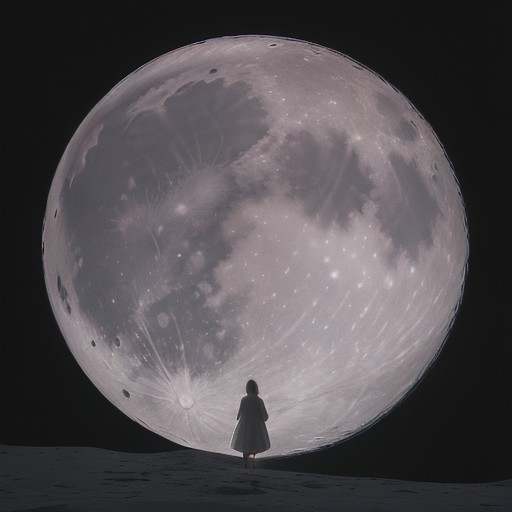
Defining the Enigma: What is the Moon?
The Moon, Earth’s natural satellite, is a celestial body that has captivated humanity for millennia. It is the largest object in our night sky, with a diameter of approximately one-third that of Earth. Despite its size, the Moon only accounts for about 1.2% of our planet’s mass, demonstrating how a relatively small entity can have such a profound impact on life on Earth. By definition, a moon is an object of smaller mass orbiting a planet, which means that a moon can never exceed the mass of its parent planet. In our solar system, the Moon stands as a significant point of interest, not just for its physical characteristics but for the many mysteries it holds.
The Moon’s Crucial Role in Earth’s Ecosystem
Beyond its beauty and allure, the Moon plays a critical role in moderating Earth’s climate. It stabilizes the tilt of Earth’s axis, which is essential for maintaining the relatively stable temperatures that make our planet habitable. This stabilization prevents dramatic shifts in climate that could result from a constantly changing axial tilt. Furthermore, the Moon’s gravitational pull is responsible for the ocean’s tides, creating a rhythmic dance of water that affects marine life and coastal ecosystems. This tidal force is not just a natural phenomenon; it influences navigation, fishing, and even the behavior of various species.
Unique Features: More Than Meets the Eye
The Moon is not just a barren rock; it harbors unique features that continue to intrigue scientists and skywatchers alike. One such phenomenon is the lunar illusion, an optical illusion that makes the Moon appear larger when it is near the horizon. This psychological effect is caused by the Earth’s atmosphere and the way our brains perceive size in relation to other objects. Moreover, while our Moon is the largest relative to its planet, it is not the largest moon in the solar system. That title belongs to Ganymede, the largest moon of Jupiter, which is even larger than the planet Mercury and possesses its own magnetic field, sparking interest in moon-to-moon relationships.
Additionally, consider Charon, Pluto’s largest moon, which exhibits a unique synchronized orbit with its parent planet. Charon is half the size of Pluto, and they both always show the same face to each other. These captivating dynamics challenge our understanding of celestial mechanics and raise intriguing questions about the formation and evolution of moons.
A Giant Leap for Mankind: Apollo 11
One cannot discuss the Moon without mentioning the historic Apollo 11 mission. On July 20, 1969, Neil Armstrong took a giant leap for mankind, becoming the first human to walk on the lunar surface. This monumental event not only marked a significant milestone in space exploration but also represented a triumph of human ingenuity and determination. The mission culminated in a series of groundbreaking discoveries, from lunar geology to insights into the origins of our solar system.
As we reflect on Apollo 11, it’s essential to recognize the cultural and political implications of this achievement. The space race between the United States and the Soviet Union during the Cold War fueled technological advancements and inspired a generation. As we celebrate this historic moment, we must also question what it means for current and future explorations. Will the next lunar missions continue to unite humanity, or will they ignite new tensions in the competition for space dominance?
The Future of Moon Exploration: A New Frontier
Looking ahead, the future of Moon exploration is poised to be more exciting than ever. NASA has ambitious plans to return humans to the Moon by 2024 through the Artemis program, which aims to establish a sustainable human presence on the lunar surface. This initiative not only seeks to explore the Moon’s resources but also lays the groundwork for future missions to Mars and beyond. The involvement of private companies like SpaceX adds a new dimension to lunar exploration, raising questions about the commercialization of space and its implications for international cooperation.
As we stand on the brink of this new era, one cannot help but wonder: what are the potential implications of a sustained human presence on the Moon? Could lunar colonies provide new opportunities for scientific research, mining, and even tourism? Or will the Moon become a battleground for geopolitical interests, as nations vie for control over its resources? These questions invite a spectrum of opinions, fostering discussions about the ethics and responsibilities that come with space exploration.
Impacts on Earth: From Tides to Technology
The Moon’s influence extends far beyond its gravitational pull on tides. As we develop technologies to explore the Moon, we also uncover new opportunities for advancements on Earth. The innovations required for lunar missions—such as improved robotics, life-support systems, and sustainable energy solutions—can have profound applications in addressing global challenges, including climate change and resource management.
Moreover, the collaborative efforts required for international lunar missions can foster greater unity among nations. As countries come together to explore the Moon, they can share knowledge, technology, and resources, which could lead to more peaceful and cooperative global relations.
Conclusion: The Moon Awaits
As we gaze up at the Moon, we are reminded of its enduring mystery and significance. It is not just a celestial body; it is a symbol of human aspiration and curiosity. The Moon has shaped our planet’s climate, guided our cultures, and inspired our dreams of exploration. With the next wave of lunar missions on the horizon, we stand at the threshold of a new chapter in our relationship with this ancient companion.
The Moon awaits, and it poses questions that will challenge our understanding of the universe. As we embark on this journey, we must consider the broader implications of our explorations—how they will shape our world and what legacy we will leave for future generations. Will we be responsible stewards of the Moon, or will we repeat the mistakes of our past? The answers lie in the stars, and it is up to us to find them.


