
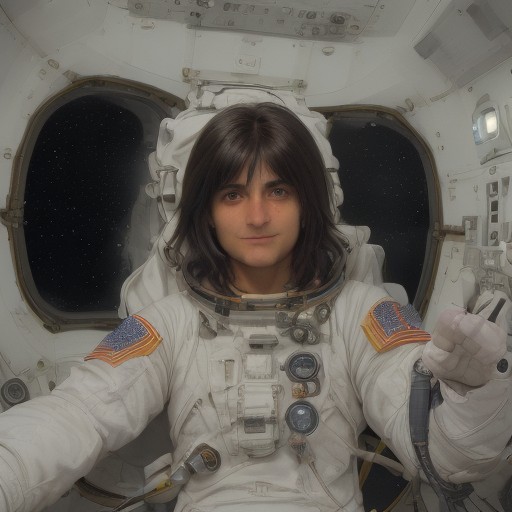
The Trailblazer of Space: Sunita Williams’ Record-Breaking Journey
NASA astronaut Sunita “Suni” Williams is not just a name; she represents the pinnacle of human exploration and resilience in the cosmos. Since she first donned the prestigious NASA flight suit in 1998, Williams has made an indelible mark in space history. Holding the record for the most spacewalks by a woman—seven in total—and the longest cumulative spacewalk time for a female astronaut at a staggering 50 hours and 40 minutes, Williams is a true pioneer. Her adventurous spirit was further highlighted in 2007 when she became the first person to run a marathon in space, showcasing her ability to blend athleticism with the challenges of microgravity.
The Current Mission: A Space Odyssey Like No Other
Currently, Williams finds herself on an unexpected extended mission aboard the International Space Station (ISS). Originally scheduled for just an eight-day excursion with fellow astronaut Barry “Butch” Wilmore as part of Boeing’s Starliner spacecraft’s maiden crewed flight, complications have left them stranded in orbit for five months. The anticipated return aboard the SpaceX Crew-9 Dragon spacecraft is not set until early 2025, turning what was meant to be a brief assignment into a remarkable test of endurance.
Health Concerns: The Price of Prolonged Space Living
As the days stretch into months, concerns have arisen regarding the health of the astronauts. Observers noted Williams’ thinning appearance, prompting questions about the impacts of prolonged exposure to microgravity. While NASA has been quick to reassure the public that both Williams and Wilmore are in good health, medical experts warn that extended missions could carry unforeseen health implications. Will the human body be able to adapt to such conditions, or are we merely scratching the surface of what long-term space habitation means for our astronauts?
Life on the ISS: Research, Resilience, and Reflection
Despite the challenges of their extended stay, Williams and Wilmore have remained focused on their mission. Engaging in vital research, maintenance tasks, and data analysis, they have exemplified the spirit of scientific inquiry that defines the ISS. Interestingly, they are also preparing to cast their votes in the upcoming U.S. presidential election, utilizing NASA’s established process for astronauts in orbit. This brings an intriguing twist to the democratic process and highlights how technology allows for civic engagement, even from the depths of space.
The Emotional Toll: Missing Home and Family
Life in space is not just a physical challenge; it is an emotional journey as well. Williams has expressed the peacefulness of the space environment, contrasting it with the longing for her family back on Earth. The ISS, orbiting at an incredible speed that allows astronauts to witness 16 sunrises and sunsets daily, is both mesmerizing and isolating. Each sunrise serves as a reminder of home, while each sunset brings a wave of nostalgia. How does one navigate the emotional complexities of being separated from loved ones while fulfilling a mission that is bigger than oneself?
Public Reaction: A Mix of Awe and Concern
Public reaction to Williams’ extended mission has been a blend of awe and concern. On one hand, she is celebrated as a hero, a role model for aspiring astronauts and young women everywhere. On the other hand, questions linger about the implications of such prolonged space stays. Will future missions to Mars or beyond require astronauts to endure similar challenges? The conversations surrounding these issues are buzzing, as the public grapples with the realities of space exploration.
Future of Space Exploration: A Reflection on Human Limitations
As we look to the future, Williams’ current mission raises vital questions about human limitations in space. Her experience could serve as a case study for NASA and other space agencies as they plan for longer missions into deep space. The lessons learned from Williams and Wilmore’s extended stay aboard the ISS may shape the trajectory of human space exploration for decades to come. Will we be ready to send astronauts on year-long missions to Mars, and what preparatory measures are necessary to ensure their health and safety?
Inspiring Generations: Sunita Williams as a Beacon of Hope
Sunita Williams stands as a beacon of hope and inspiration. Her journey encapsulates the essence of human exploration, pushing the boundaries of what we know about living and working in space. As she continues to perform groundbreaking research in orbit, she reminds us all of the power of human spirit and determination. Her story is not just about space travel; it is about the relentless pursuit of knowledge, the challenges of resilience, and the strength of community, even when separated by the vastness of space.
Conclusion: The Journey Continues
As we await the safe return of Sunita Williams and Barry “Butch” Wilmore, the world watches with bated breath. Their journey is far from over, and the implications of their extended stay in space will likely echo in the halls of NASA and beyond for years to come. Williams’ legacy, marked by her records and experiences, will undoubtedly inspire future generations of explorers to look up to the stars and dream. After all, the universe is vast, and the human spirit is boundless.
In this era of space exploration, where boundaries are constantly being redefined, Sunita Williams stands strong as a symbol of what it means to be a pioneer. Her journey encourages us to continue pushing the limits of our understanding and to never cease in our quest for discovery.


