
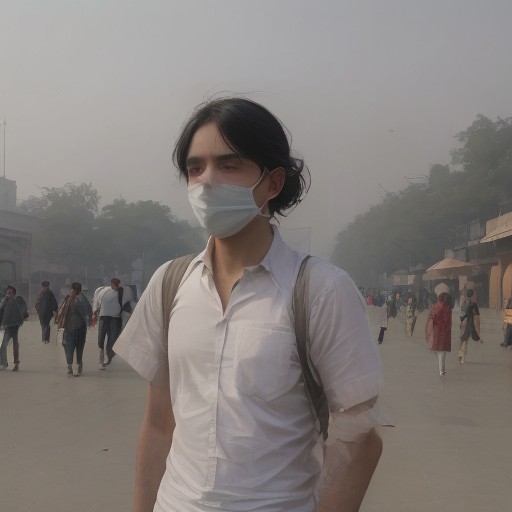
Delhi’s AQI Hits Alarming Levels – Are We Ignoring a Crisis?
As of November 24, 2024, the Air Quality Index (AQI) in Delhi has reached a staggering 382, teetering on the edge of the ‘severe’ category. This disheartening statistic has sent shockwaves through the capital, raising urgent questions about public health, governmental accountability, and the future of urban living in one of the world’s most polluted cities. According to reports from the Central Pollution Control Board (CPCB) and prominent news outlets like Business Standard, the air pollution crisis in Delhi NCR is far from over, and the implications are dire.
What’s Behind the AQI Spike?
The alarming AQI levels can be attributed to a combination of factors, including vehicular emissions, industrial waste, and the infamous stubble burning from neighboring states. Noida, which lies just across the border, is experiencing similar issues with an AQI that often mirrors Delhi’s deteriorating air quality. The recent spike has reignited debates about the effectiveness of the odd-even scheme implemented to control vehicular pollution. While some argue that it has had a positive impact, critics claim it is merely a band-aid solution to a much larger problem.
Health Hazards: What Does an AQI of 382 Mean?
An AQI reading of 382 categorizes the air quality as ‘severe,’ posing significant health risks to the general population. Individuals with respiratory or cardiovascular conditions, the elderly, and children are particularly vulnerable. Health experts warn that prolonged exposure to such pollution levels can lead to serious health complications, including lung cancer, heart disease, and premature death.
The World Health Organization (WHO) has long warned of the dangers posed by air pollution, yet the citizens of Delhi find themselves grappling with these harsh realities daily. The air quality crisis not only threatens individual health but also places a substantial strain on the healthcare system, potentially leading to increased hospital admissions and healthcare costs.
The Public’s Response: Outrage and Activism
The rising pollution levels have sparked outrage among residents and activists alike. Social media platforms are flooded with calls for action, as citizens demand accountability from local and national leaders. The hashtag #CleanAirForDelhi has gained traction, with thousands sharing their experiences of health issues exacerbated by the toxic air. Activism has reached a boiling point, with protests being organized and petitions circulating to demand stricter regulations on emissions and more robust measures to combat pollution.
Government Action: Are We Doing Enough?
In response to the escalating crisis, Delhi’s government has implemented various measures aimed at curbing pollution levels. These include the aforementioned odd-even scheme, stricter regulations on construction activities, and a crackdown on industrial emissions. However, critics argue that these measures are too little, too late. Many contend that without a comprehensive and long-term strategy, these actions are merely temporary fixes in the face of a growing health crisis.
The government’s plans to address pollution have been met with skepticism. Environmentalists argue that the focus should be on transitioning to cleaner energy sources, improving public transportation, and enforcing stricter emissions standards for vehicles and industries. The question remains: are policymakers truly committed to reversing the trend of air quality deterioration, or are they merely engaging in political posturing?
Noida’s Struggles: A Mirror to Delhi’s Crisis
As the pollution level in Noida continues to rise, residents are left to wonder if their city is destined to share the same fate as Delhi. Just like their neighbors, Noida’s inhabitants are plagued by respiratory issues and other health problems linked to poor air quality. Recent data reveal that the Noida AQI has also fluctuated dangerously close to the ‘severe’ category, prompting local authorities to take action.
However, with many residents commuting to Delhi for work, the pollution levels in both cities are inextricably linked. What happens in Delhi reverberates in Noida, highlighting the need for a coordinated approach to tackle air quality issues across the National Capital Region (NCR).
Online Movements and the Future of Clean Air
In this digital age, online activism plays a crucial role in the fight for cleaner air. Campaigns leveraging social media platforms have emerged, aiming to raise awareness and pressure authorities to take decisive action. Activists are utilizing online petitions, awareness videos, and information-sharing platforms to educate the public about the risks associated with poor air quality.
Furthermore, technological advancements have made it easier for residents to monitor air quality levels in real-time. Various apps and online platforms provide updates on AQI readings, empowering individuals to make informed decisions about when to venture outside. However, while these tools can help mitigate the effects of pollution, they do not address the root causes of the crisis.
The Broader Implications of Delhi’s AQI Crisis
The implications of Delhi’s air pollution crisis extend beyond health concerns. The city’s diminishing air quality poses significant challenges to economic growth and sustainability. As more people fall ill and healthcare costs rise, the economic burden on families and the government increases. Additionally, poor air quality could deter tourists and foreign investment, further stunting the city’s growth.
Moreover, the environmental repercussions are severe. The toxic air contributes to climate change, with pollutants adversely affecting not just human health but also the health of ecosystems. The urgent need for a comprehensive overhaul of policies that prioritize environmental sustainability has never been clearer.
Can We Reverse the Trend? A Call for Action
As the AQI in Delhi hovers around 382, the question lingers: can we reverse this alarming trend? The answer lies in collective action—government officials, businesses, and citizens must unite to combat the pollution crisis. Comprehensive policy changes, investment in green technologies, and public awareness campaigns are essential to turn the tide.
Additionally, international cooperation could provide valuable insights and resources in the fight against air pollution. Cities around the world have successfully implemented strategies to improve air quality, and Delhi could learn from these examples.
Conclusion: The Time for Change is Now
Delhi’s air quality crisis is not just a local issue; it is a global concern that demands immediate attention. With the AQI reaching a dangerous 382, the call for action has never been more urgent. Citizens must hold their leaders accountable, demand transparency, and push for policies that prioritize public health over short-term gains. The future of Delhi—and indeed, the health of its residents—depends on it.
Join the conversation: What are your thoughts on Delhi’s air quality crisis? How can we collectively tackle this pressing issue? The air we breathe is a fundamental right, and it’s time to fight for cleaner air for generations to come.


