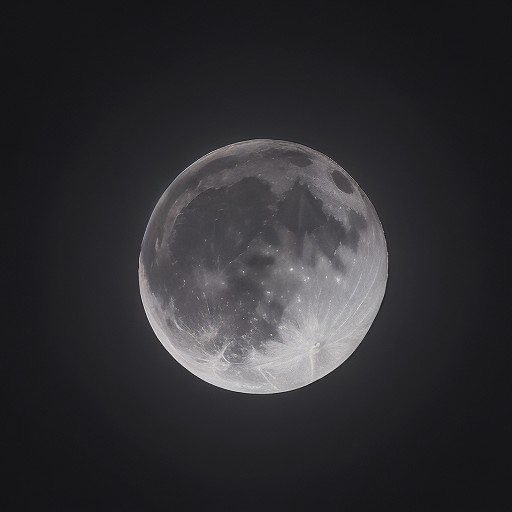
The Moon: More Than Just a Bright Light
The moon, the largest and brightest object in our night sky, has captivated humanity for centuries. From ancient civilizations that worshiped its glow to modern scientists studying its influence on Earth, the moon plays a critical role in our lives. It not only lights up the night but also acts as a vital stabilizer of our planet’s climate. Recent studies reveal that the moon’s gravitational influence is essential for moderating Earth’s tilt, helping to maintain a relatively stable climate. But what does this mean for our future?
The Moon’s Gravitational Embrace
Gravitational forces are often overlooked in discussions about climate change and environmental stability. However, the moon’s role in stabilizing Earth’s axial tilt is crucial. This tilt is responsible for the changing seasons, which in turn affect ecosystems and weather patterns globally. As solar activity fluctuates, the moon’s gravitational pull helps keep our planet in a consistent orbit, ensuring that life on Earth can thrive. Without this lunar influence, life as we know it could be drastically different.
Historical Reflections: Love and the Moon
The moon’s impact stretches beyond the natural world; it has also found its way into our culture and traditions. Historical plays, such as “The Honey Moon” by John Tobin, reference the moon as a symbol of love and intimacy. The idea of a honeymoon period, where newlyweds retreat into seclusion, mirrors the moon’s role in providing a romantic backdrop for lovers. This connection between the moon and human relationships raises intriguing questions: Are our emotions and experiences tied to this celestial body more than we realize?
A Cosmic Stage: The Moon and Solar Activity
The moon also plays a significant role as a backdrop for observing cosmic phenomena. With the current solar activity related to Solar Cycle 25, we are witnessing shifts in cosmic ray counts and radiation levels on Earth. The moon’s position can influence these observations, but the primary drivers are solar events. As solar flares and coronal mass ejections occur, they create stunning auroras that can be seen from various parts of the world—an awe-inspiring reminder of our connection to the universe.
Full Moon: A Time for Reflection and Rejuvenation
When we talk about the moon, we cannot forget the mystical allure of the full moon. This celestial event has been a source of fascination throughout history. Many cultures celebrate the full moon, believing it to possess special powers. From rituals to festivals, the full moon symbolizes renewal, reflection, and a connection to the cosmos. On nights when the moon rises today, people often gather, sharing stories and basking in its glow. But what happens to our psyche during these lunar phases? Is there something more than mere superstition at play?
The Controversial Debate: Moon Landing and Its Legacy
While the moon has always been a source of wonder, it has also been a subject of controversy. The moon landing in 1969 remains a topic of debate for conspiracy theorists who claim it was staged. Despite overwhelming evidence and testimonies from astronauts, the idea persists. This controversy raises important questions about trust in science and media. Why do some individuals choose to believe in alternative narratives? Perhaps it stems from a deep-seated need for skepticism in an era dominated by misinformation.
Environmental Implications: The Moon and Climate Change
As we face the looming threat of climate change, the moon’s role as a stabilizing force becomes even more significant. Recent studies suggest that any changes in the moon’s orbit or gravitational influence could exacerbate climate issues. This revelation prompts discussions about our responsibility to protect not only our planet but also the celestial bodies that play a role in its stability. How can we ensure that our actions do not have unforeseen consequences on our moon and, by extension, on Earth?
The Moon: A Symbol of Hope or Fear?
Throughout history, the moon has been seen as both a harbinger of hope and a source of fear. It represents mystery, beauty, and the unknown, but it can also symbolize chaos and unpredictability. As we continue to explore the moon—planning missions to establish bases and potentially mine its resources—what are the implications for our planet? Are we risking our natural balance for the sake of progress? The ethical dilemmas surrounding space exploration can no longer be ignored.
Conclusion: Embracing Our Celestial Companion
The moon is not merely a bright object in the night sky; it is a powerful force that influences our planet in ways we are only beginning to understand. From stabilizing our climate to inspiring cultural narratives, the moon is an integral part of our existence. As we continue to explore its mysteries, we must remain aware of our responsibilities toward both our planet and the celestial bodies that share our cosmic neighborhood. The moon’s glow beckons us to reflect on our past, present, and future—urging us to forge a deeper connection with the universe and the world we inhabit.
As we gaze at the moon tonight, let us ponder its significance and our role as stewards of this beautiful planet. The moon may be our guardian, but it is also a reminder of the delicate balance we must maintain in our pursuit of progress and understanding.


